The Wirral peninsula sits between the Mersey and the Dee, a thumb of land with its own geology, its own housing history, and a set of drainage quirks we rarely see on the Liverpool side of the water. At Blocked Drains Liverpool our engineers cross the tunnel several times a day to attend jobs from Seacombe to Heswall, and the patterns we see on the Wirral are distinctly different from those in central Merseyside.
This guide sets out what makes Wirral drainage different, what you should expect in the most common housing types, and the peninsula-specific problems our team attends week in, week out.
The Geography in One Paragraph
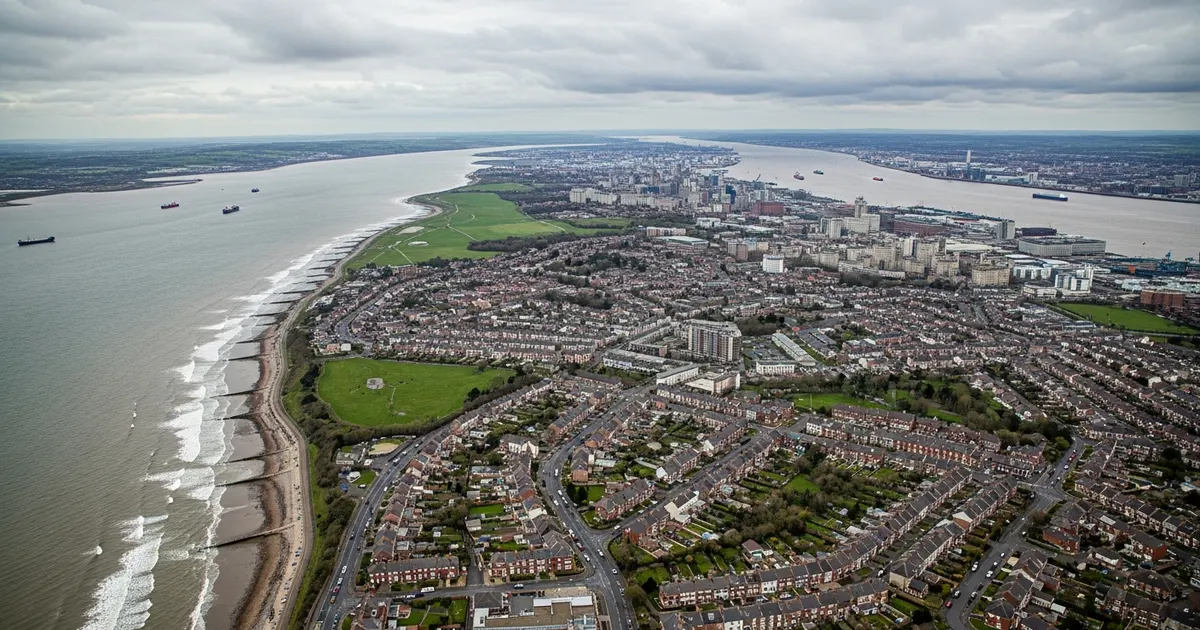
The Wirral is roughly 15 miles long and 7 miles wide. The eastern shore — Birkenhead, Wallasey, New Brighton — faces the Mersey and sits on a mix of Triassic sandstone and glacial till. The western shore — West Kirby, Heswall, Parkgate — faces the Dee estuary and is significantly more clay-rich. The interior — Prenton, Oxton, Bebington — sits on rising ground with pockets of both geology. The peninsula's highest point, Bidston Hill at 234ft, exposes the sandstone bedrock directly. All of this matters for drainage.
Birkenhead and the Victorian Core
Central Birkenhead — the streets around Hamilton Square, Tranmere, and the older parts of Rock Ferry — is Victorian and Edwardian terrace, much of it built between 1850 and 1910 to house workers at the Laird shipyard and the docks. The drainage in this stock is typically:
- 100mm and 150mm salt-glazed clay, laid in 2ft lengths with rigid joints.
- Shared rear yard drainage, with two to four properties on a single run.
- Combined sewers — foul and surface water in the same pipe — discharging to public sewers under the main roads.
The characteristic problems are joint displacement from 140 years of minor ground movement, root intrusion at every joint on streets with mature plane trees, and the slow, steady collapse of clay pipework where it was laid without adequate support. Post-2011, most of these shared runs are United Utilities' responsibility — see our guide to drain ownership in Merseyside for the detail.
The Post-War Estates: Upton, Greasby, Moreton
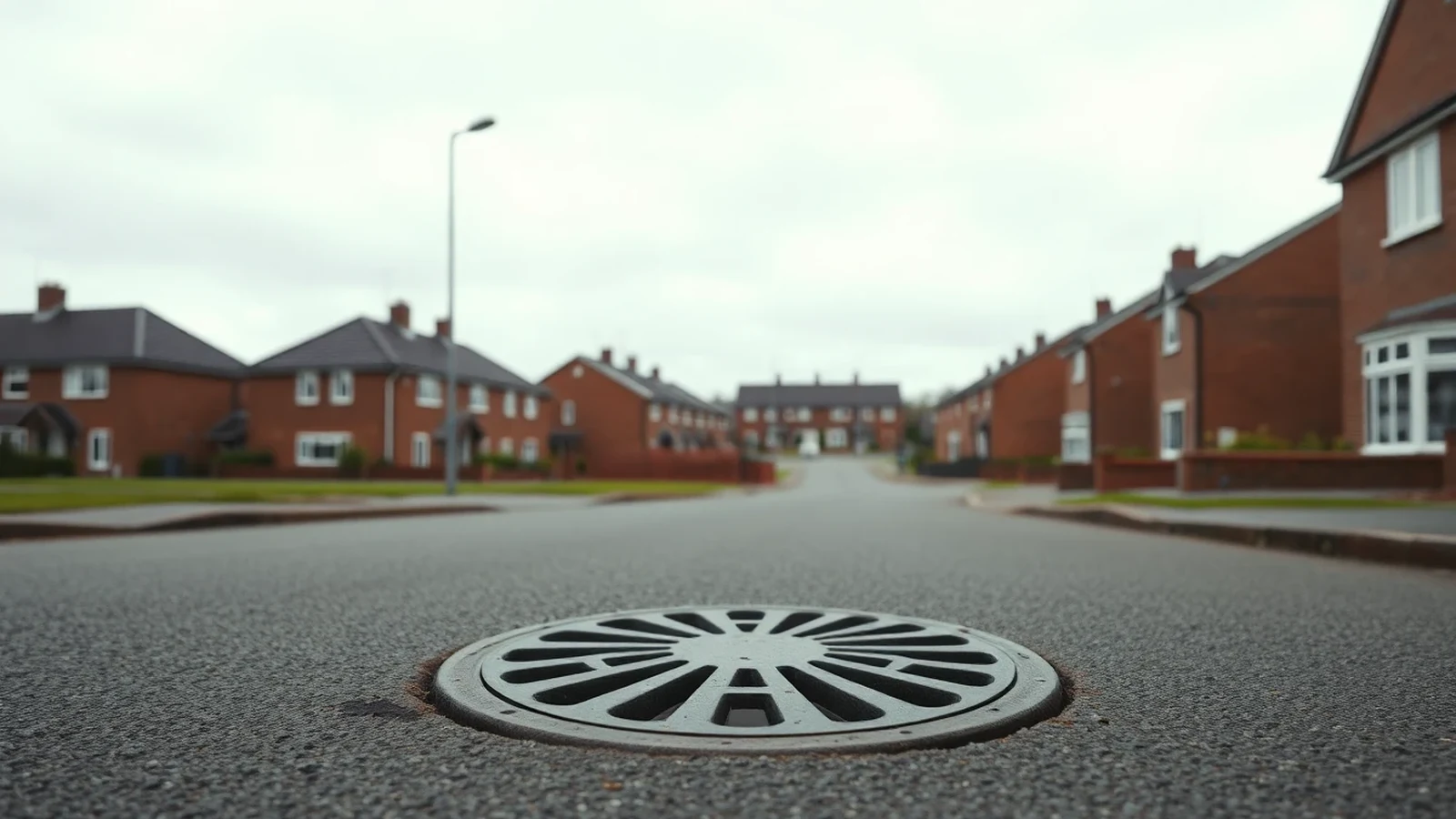
A broad band of post-war housing — 1950s to early 1970s — runs across the middle of the peninsula through Upton, Greasby, Moreton and parts of Eastham. The drainage is typically:
- 100mm pitch fibre or early grey PVC.
- Separate foul and surface water runs, with surface water usually discharging to soakaways or to watercourses.
- Shallow falls and long runs to central manholes.
Pitch fibre is the characteristic problem of this era. Laid widely between 1950 and 1975, it deforms over decades into an oval cross-section, losing capacity and trapping debris. On a surprising number of Upton and Greasby streets we find pitch fibre that is now at or below 50% of its original bore. Reline or excavate is the question, and we covered that choice in our guide to pipe relining vs excavation.
Wallasey, New Brighton and the Coastal Drainage
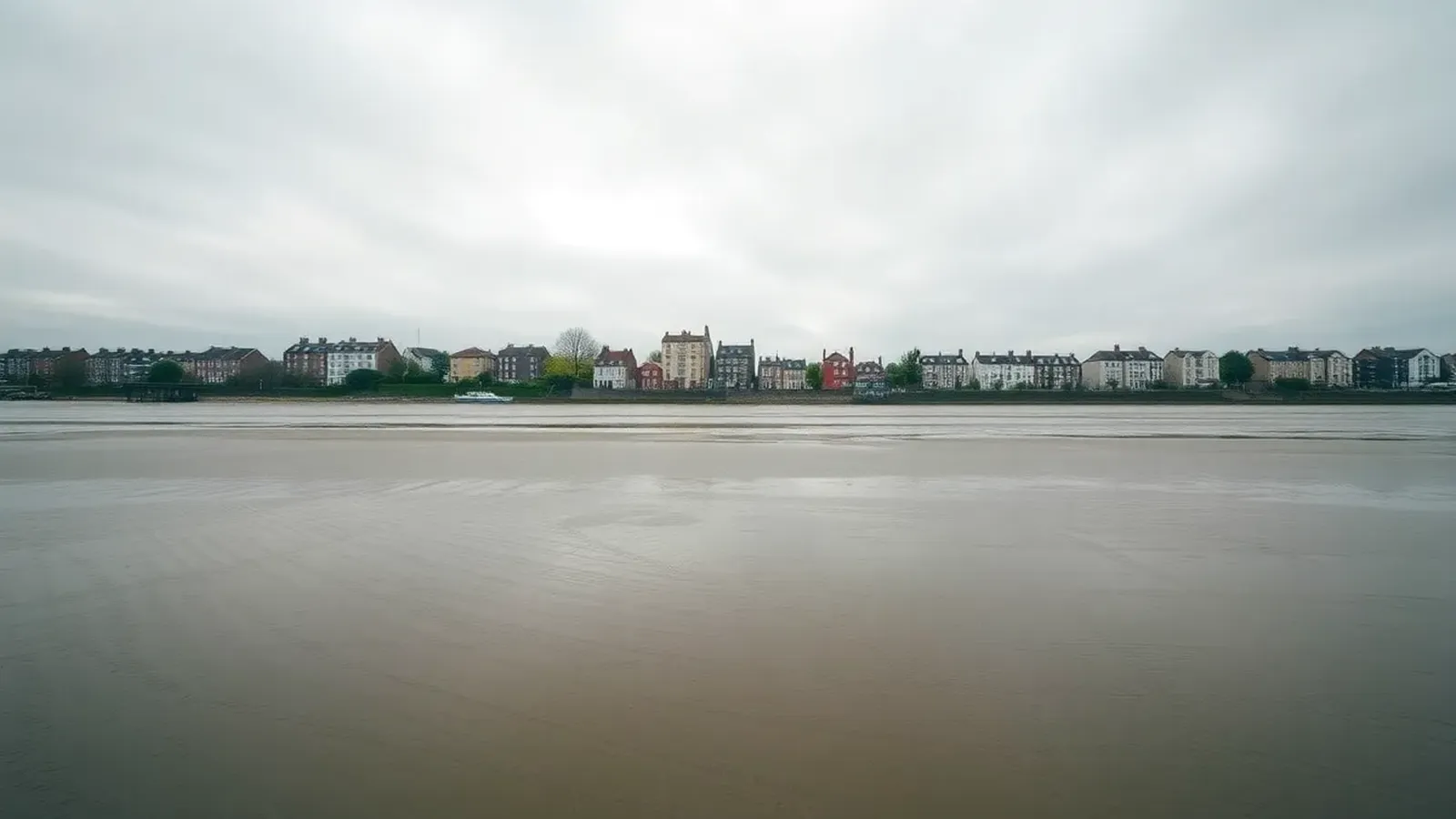
The drainage along the northern and eastern Wirral coast is affected by something Liverpool-side properties largely escape: tidal influence. In Wallasey, Liscard and parts of New Brighton, the surface water drainage discharges to the Mersey via outfalls that are submerged at high tide. At spring tides and during easterly surges, the system can back up.
This shows as:
- Gullies backfilling at high tide during rain.
- Slow-draining ground floor toilets timed to the tide table.
- Occasional sea water appearing in surface water gullies.
The fix is usually a non-return flap valve on the affected lateral, installed in a sealed chamber near the outfall side of the property. This is specialist work — our drain repairs team handles several each year along the Wallasey sea wall.
Bidston, Oxton and the Bedrock Problem
On the rising ground around Bidston Hill and Oxton village, the sandstone bedrock sits close to the surface. This creates two problems.
First, drains cut through sandstone during construction often end up in direct contact with rock, which prevents the pipe from flexing with seasonal ground movement. Clay pipes fracture; uPVC pipes can pop at joints. We regularly attend Bidston and Prenton properties where a single cracked pipe has been replaced three times by previous owners before a CCTV survey reveals the pipe is being flexed by seasonal movement against the bedrock.
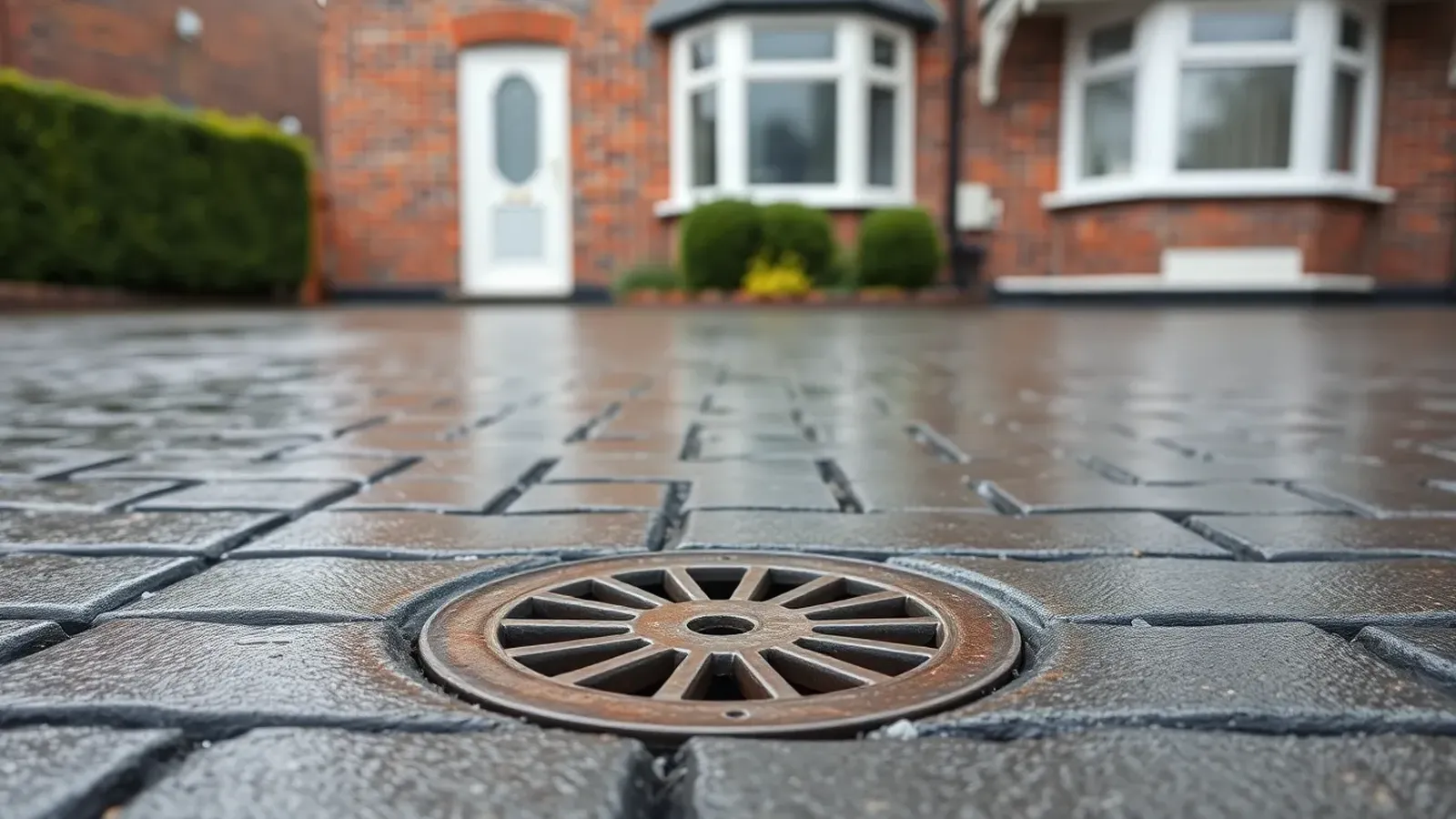
Second, where bedrock forces drainage to run shallow, it is vulnerable to surface loading — parking over the run, a new driveway, a garden wall. We have found drains less than 200mm below driveways in parts of Prenton.
For properties in this area, our pre-purchase survey is genuinely worth its cost.
Oxton, Noctorum and the Tree-Root Streets
The Edwardian and interwar avenues of Oxton, Noctorum and the leafier parts of Prenton are a classic root-intrusion zone. Plane trees, sycamores and lime trees line streets like Village Road, Shrewsbury Road and Woodchurch Lane. Their roots find clay joints and exploit them.
Over the last five years, root intrusion has been the single most common cause of CCTV-documented defects we have found in this area. It presents as slow drainage, occasional backups, and — on a survey — a mass of fibrous roots at a joint, usually 3 to 6 metres into a run from a manhole.
We wrote a detailed guide to tree roots in drains in Liverpool that applies directly to the Wirral avenues. The short answer is: jetting removes the root mass, but lining or localised repair is needed to stop regrowth.
Clay Ground on the Dee Side
Heswall, Gayton, Thurstaston and the western edge of the peninsula sit on heavier clay. The classic problem here is seasonal ground movement — soils shrink in dry summers and swell in wet winters, placing cyclical stress on pipework. Properties in this area see more displaced joints and more fractures than their eastern counterparts, particularly where mature trees draw down water in summer.
The other clay-ground issue is soakaway failure. Many interwar and post-war properties on the Dee side use soakaways for surface water, and over decades the clay around the soakaway becomes saturated and silted. We covered this in our guide to soakaway problems and garden flooding.
New-Build Estates: Bromborough, Eastham and the Former Industrial Sites
The wave of new-build development on former industrial land — parts of Bromborough, the Port Sunlight fringes, and newer estates around Eastham — has its own set of drainage problems. Made ground, historical contamination, and shallow bedrock combine to produce drainage that is often shallower than normal, sometimes running through sub-base material that has settled unevenly.
The characteristic issue here is early-age pipe deformation: drains laid 10 to 15 years ago that are already showing ovality or mild displacement. Where the estate is under Section 104 adoption, the developer or management company is responsible — always check before instructing a private contractor.
What We Typically Carry When We Cross the Tunnel
A Wirral-bound van from Blocked Drains Liverpool is usually loaded differently from a Liverpool city job. We carry:
- Extra length on the jetting reel (Wirral runs are often longer than Liverpool terrace runs).
- CCTV equipment capable of both 100mm and 150mm with a 60-metre reel.
- Non-return valve stock for coastal jobs.
- Liner samples in both 100mm and 150mm.
Whether the job is a blocked toilet in a Wallasey maisonette or a full CCTV drain survey on an Oxton avenue, we cover the peninsula seven days a week. Most Wirral callouts are attended promptly, with urgent jobs prioritised.
When to Call
If you are on the Wirral and you have slow drains, recurring blockages, or damp appearing at the base of a wall, request a quote online. We will talk through the symptoms, work out from your street and housing era what we are most likely to find, and quote honestly before we leave the yard. Most Wirral problems are solvable; the trick is knowing which of the peninsula's several drainage regimes you are dealing with.