If your garden turns into standing water every time it rains, and the flooding takes days rather than hours to drain away, the most likely cause is a failed soakaway. Soakaways are the invisible workhorse of residential surface-water drainage — when they work, nobody thinks about them, and when they fail, the damage can run from soggy lawns to waterlogged foundations.
This guide explains what a soakaway is, why they fail, and how the fix differs depending on where in Merseyside you live and what you are sitting on.
What a Soakaway Actually Is
A soakaway is a below-ground void that receives surface water — rainwater from roof downpipes, patios, and driveways — and allows it to percolate gradually into the surrounding soil. It exists because not every property can, or should, connect its rainwater to the public sewer. On many post-1970s developments, planning and building regulations positively require surface water to be disposed of by soakaway where ground conditions allow, specifically to reduce load on combined sewers that would otherwise overflow in storm events.
A traditional soakaway is a rubble-filled pit, typically 1–2 cubic metres. A modern one is a plastic crate structure wrapped in geotextile, which has roughly three times the void ratio of rubble and a much longer design life. Older properties around Liverpool that predate the soakaway requirement often drain surface water to the combined sewer or directly to a watercourse — which is lawful if the original consent exists, but increasingly unusual.
Why Soakaways Fail
A soakaway has two failure modes: the void itself becomes blocked, or the surrounding soil stops accepting water.
Silting
The single most common cause, particularly on properties more than 20 years old. Every year, leaves, grit, moss, sand from roof tiles, and fine sediment wash off the roof and hard surfaces and accumulate at the bottom of the soakaway. Without a silt trap or catchpit upstream, the void progressively fills. By the time inflow exceeds outflow, the soakaway is effectively a cesspit with nowhere to go.
Crate or Rubble Collapse
Plastic crates have a design life of around 30–50 years. Older crate systems installed in the 1980s are now reaching end-of-life, and garden compaction, heavy vehicle loads, or tree root pressure can crush the void before then. Rubble soakaways can collapse if the surrounding geotextile fails and fines migrate in.
Clay Soil Saturation
In areas of Merseyside that sit on boulder clay — most of inner Liverpool, Huyton, Knowsley, and the inland parts of the Wirral — the surrounding soil's ability to accept water is marginal at the best of times and nonexistent in winter. A soakaway sized for summer infiltration rates simply cannot keep up when the clay is already saturated. Many of the soakaway callouts we attend in these areas are not "failed" soakaways at all — they were undersized from the day they were built.
Coastal Sandy Soils
Conversely, sandy soils around Crosby, Southport, Formby, and the coastal edges of the Wirral infiltrate rapidly but are prone to a different failure: fine sand migrating into the void and silting it from below. Properly-installed geotextile wraps prevent this; many older installations lack them or have had them compromised.
Incorrect Sizing
Building Regulations Approved Document H3 sets out how soakaways must be sized — specifically, using BRE Digest 365 methodology, which accounts for the impermeable area being drained, the design storm, and the measured infiltration rate of the soil. Many older soakaways, and more than a few newer ones, were installed by eye. They work for a decade, then an extension adds 30 square metres of roof that was never accounted for, and the system is overwhelmed.
Tree Roots
The same roots that invade foul drainage will invade a soakaway — often more aggressively, because the water in a soakaway is not contaminated and is more biologically attractive. Silver birch, willow, and sycamore are repeat offenders. For more on root behaviour in drainage see our detailed post on tree roots and Liverpool drains earlier in this series, and our drain repairs service page for the structural implications.
Signs Your Soakaway Has Failed
- Standing water in the garden that persists for more than 12 hours after rain.
- Water overflowing at the base of a downpipe rather than disappearing silently.
- A permanently boggy patch over the soakaway's location, even in dry weather.
- Patio or paving near the soakaway lifting or subsiding.
- Damp appearing on lower walls of the property, particularly after prolonged wet spells.
- Green algae or moss proliferating on a specific area of lawn or paving.
In serious cases — usually where the soakaway has collapsed entirely — you may see surface water tracking back up the downpipe and spilling from the gutter junction. By that point, the system is fully backed up.
These symptoms overlap with general external drain problems, and diagnosing correctly matters because the repair routes are different.
Testing: How to Find Out for Sure
A proper soakaway test follows BRE Digest 365. The chamber is filled with water from a measured source, and the drop in water level is timed over a known period. A functioning soakaway in good ground should empty a 1-metre column in under 24 hours; a failed one holds water for days.
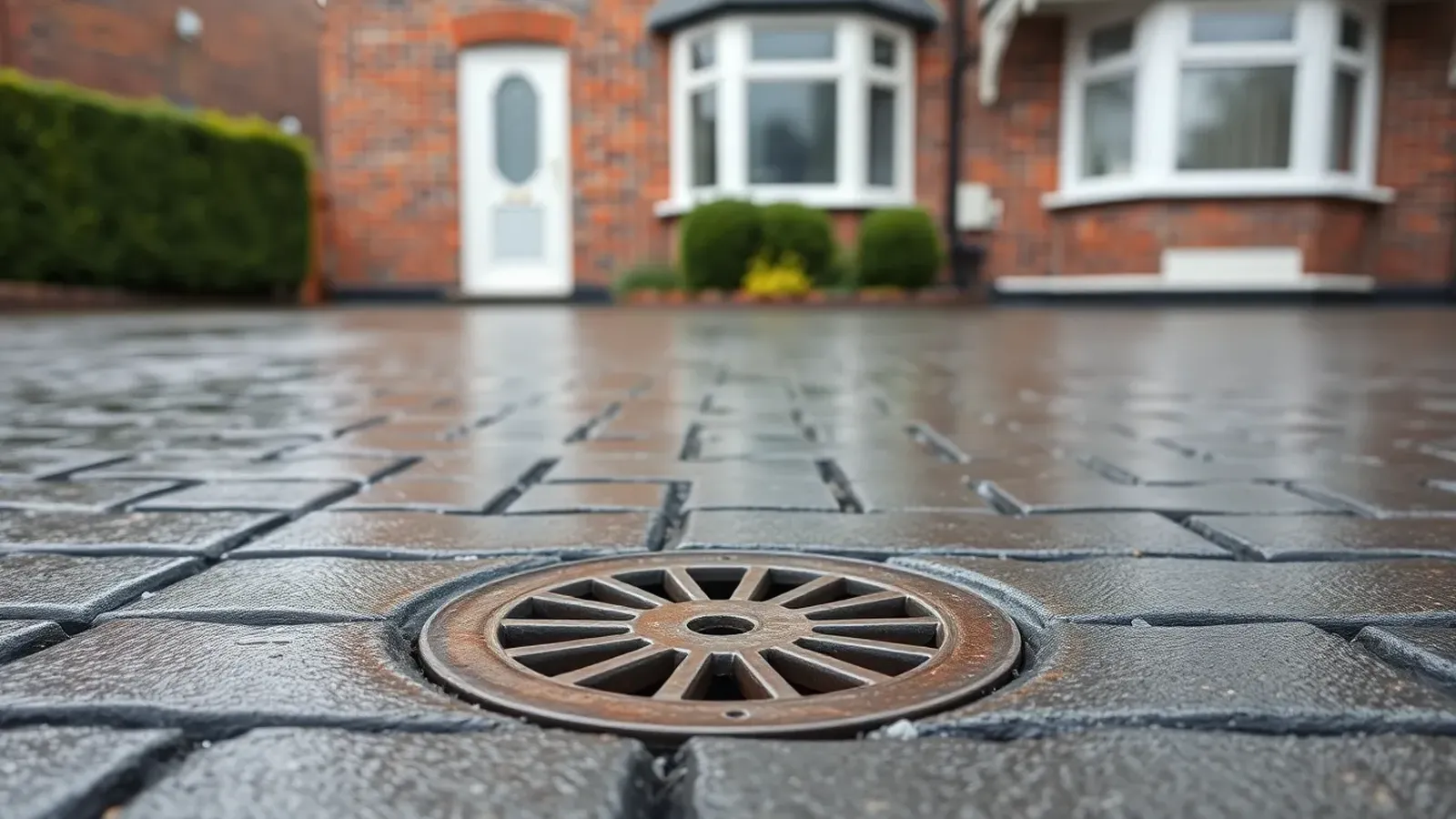
For the visual side — whether the crates are intact, whether the inlet pipe is silted, whether roots have entered — a CCTV inspection from the nearest inspection chamber or downpipe gully is the decisive test. Our CCTV drain survey service covers surface-water systems as well as foul, and on a soakaway job we will typically combine visual inspection with a percolation test before recommending any works.
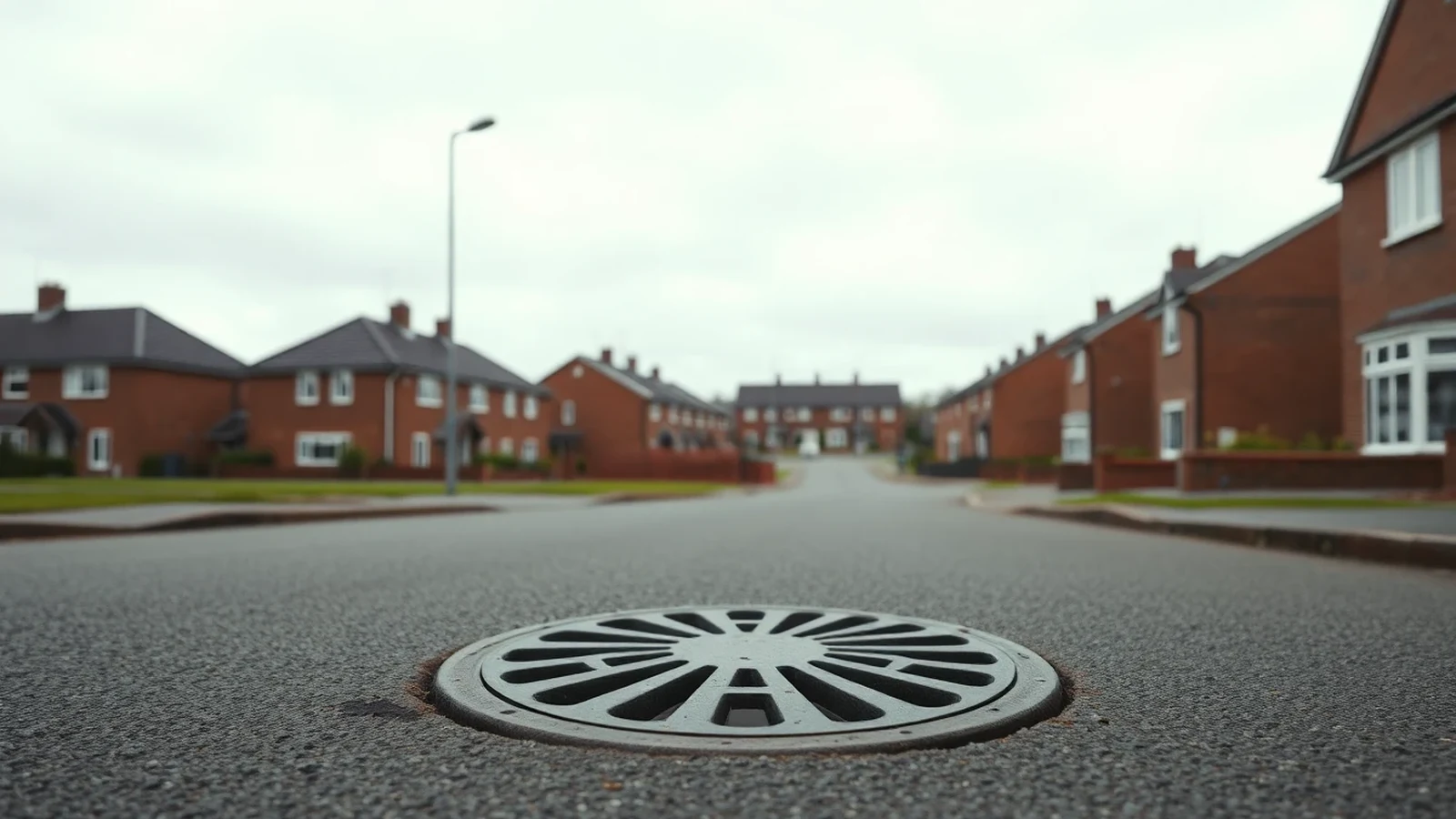
If you live on a street where every house was built at the same time and your neighbours are reporting similar garden-flooding symptoms, the probability of a systemic soakaway issue across the development is high. This is common on estates in Kirkby, Widnes, and parts of St Helens where original installations are now 30–40 years old.
Repair Options
Desilting and Jetting
If the void is intact but silted, high-pressure jetting through the inlet pipe and vacuum extraction from the chamber can restore function without excavation. This is by far the cheapest intervention and is worth trying first where a CCTV survey shows the structure is sound — the cost depends mainly on access and how much fill needs removing.
Replacement of the Soakaway
Where the crates or rubble have collapsed, or the soakaway was undersized from the start, the only solution is to dig out the old system and install a new one sized to current regulations. The cost depends on access — a garden with reasonable access is more straightforward than a soakaway under a driveway or one that needs significant reinstatement.
Modern installations use geocellular crate systems wrapped in non-woven geotextile, with an upstream catchpit to trap silt before it reaches the void. Specifying that catchpit is the single biggest factor in how long the new soakaway will last — without one, you will be desilting again inside 15 years.
Additional Capacity
Where the existing soakaway is intact but simply undersized (often after an extension), adding a secondary soakaway in parallel can be cheaper than replacing the original. This needs careful hydraulic design — the two chambers must be connected and sited so that flow distributes correctly.
Connection to a Watercourse or Sewer
Where ground conditions genuinely do not support infiltration — rare in Merseyside but occasionally encountered in high-clay sites that have waterlogged even at installation — a soakaway will never work. In these cases, connection to a surface-water sewer (where one exists) or to a watercourse (with Environment Agency consent) may be the only route. This is a specialist job involving consents and is well outside the scope of a same-day repair.
Regulations You Should Know
**Building Regulations Approved Document H3** governs rainwater drainage and soakaway design. If you are installing a new soakaway — whether replacing a failed one or serving a new extension — the work is notifiable to Building Control, and sizing must follow BRE Digest 365. A reputable drainage contractor will submit the Building Notice or work under a competent-person scheme on your behalf.
**Planning constraints.** New soakaways must generally be at least 5 metres from any building and should not be sited where they will saturate a neighbour's land. In conservation areas, including parts of Birkenhead and the Georgian quarter of Liverpool, additional consents may apply.
**Surface-water disposal hierarchy.** The regulations state a preference order: soakaway first, watercourse second, surface-water sewer third, combined sewer only as a last resort. Sewer companies may refuse new connections to combined sewers.
Insurance: When You Might Be Covered
Soakaway failure itself is not usually covered by buildings insurance — it is treated as a maintenance issue. However, consequential damage often is. Claims we have seen succeed include:
- Water ingress to a property caused by soakaway backup flooding against the foundations.
- Subsidence of an extension caused by prolonged saturation of clay soil beneath the slab, traced back to a collapsed soakaway.
- Damage to a driveway or garden wall caused by soakaway collapse under load.
A formal CCTV report and a qualified drainage contractor's written diagnosis carry real weight with loss adjusters. If you suspect your soakaway failure has caused secondary damage, commission the survey before contacting your insurer — a written defect report gives the claim a foundation that a verbal description does not.
For more on choosing a drainage contractor whose reports will stand up to this kind of scrutiny, see our guide on how to choose a drainage company in Liverpool.
What Blocked Drains Liverpool Does
We handle soakaway work across all of Merseyside, including the sandier coastal properties around Southport, the clay-heavy inland suburbs of Huyton and Knowsley, and the urban Victorian stock where original surface-water arrangements are often unclear. A typical soakaway job starts with a fixed-price CCTV survey and percolation test, followed by a written recommendation with fixed-price quotes for the options available. No call-out fees, no hourly billing, no surprise costs.
To book a soakaway investigation anywhere in Liverpool or Merseyside, request a quote online.