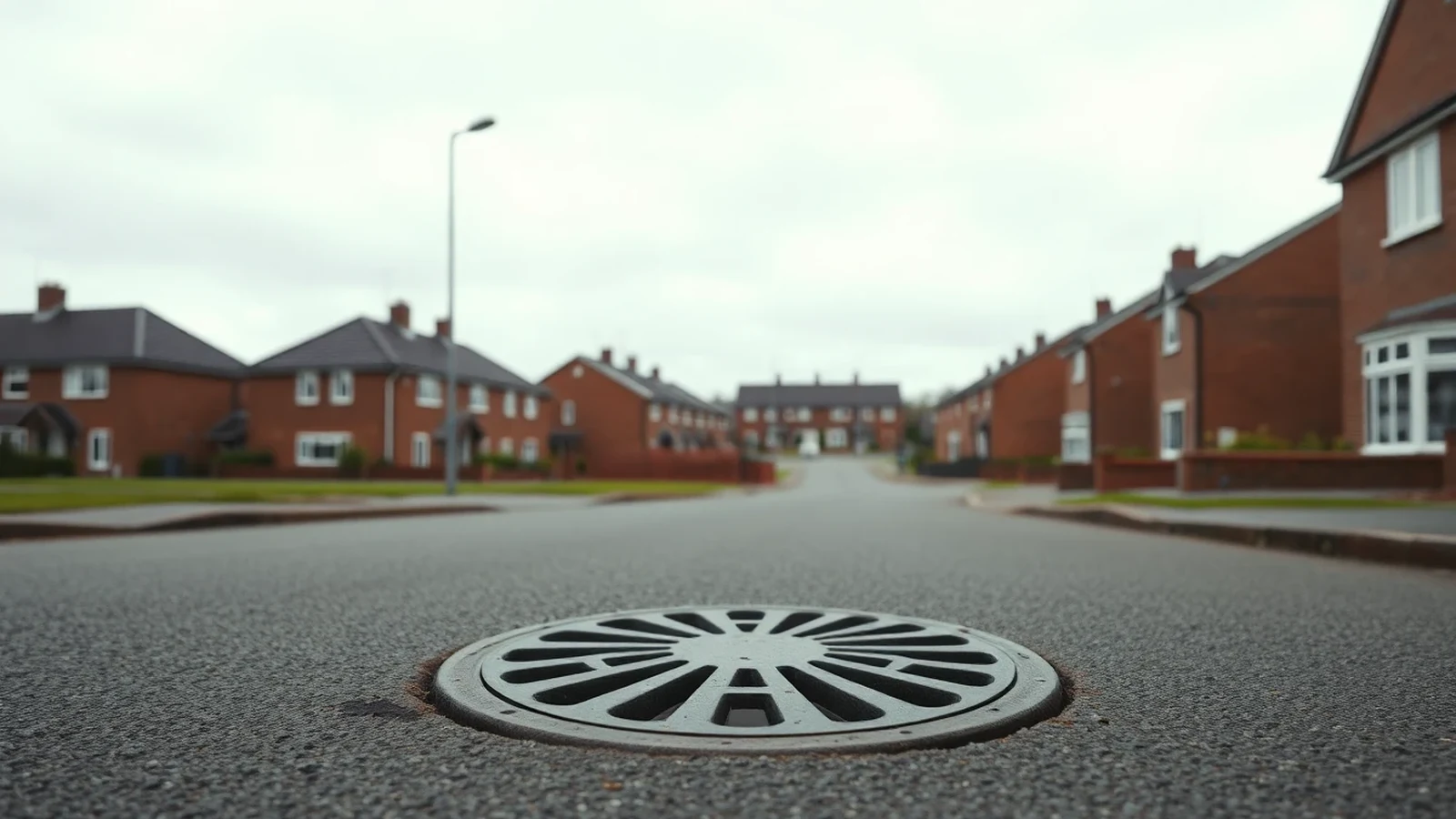
Drain ownership in England and Wales confuses almost everyone, and for good reason — the rules changed significantly in 2011 and the legacy of the old regime is still visible on the ground. If you own a home anywhere in Merseyside, from a Georgian terrace in Liverpool city centre to a 1990s cul-de-sac in St Helens, it pays to know where your responsibility ends and where United Utilities' begins.
This guide from the engineers at Blocked Drains Liverpool sets out the rules in plain English, the tests we use on-site to work out who is liable for a given blockage or repair, and the practical answer to the question of when to ring United Utilities and when to ring a private drainage firm.
The Short Version
- The **drain** inside your property boundary, up to the point where it leaves your curtilage, is yours.
- The **lateral drain** — the section that runs from your boundary to where it joins the public sewer — was transferred to United Utilities on 1 October 2011 under the Private Sewers Transfer Regulations.
- The **public sewer** — usually running under the road or a shared rear alley — is United Utilities'.
- **Shared drains** serving two or more properties that existed before 1937 were already public. Those built between 1937 and 2011 were mostly private until the transfer.
That transfer is the single most important fact for Merseyside homeowners. Before October 2011, if a shared drain serving your terrace on Smithdown Road was blocked, the cost was split between all the households it served. After October 2011, that same shared drain is United Utilities' responsibility and they should attend free of charge.
What United Utilities Will Do
United Utilities will attend, at no cost to you:
- Blockages in the **public sewer**.
- Blockages in the **lateral drain** outside your property boundary.
- Blockages in a **shared private drain** that was transferred in 2011 — effectively any drain serving two or more properties.
- Collapses or structural defects in any of the above.
- Flooding from a public sewer (internal or external), which should be reported immediately on 0345 672 3723.
They will usually attend within four hours for a confirmed internal flooding event and within 24 hours for an external blockage.
What United Utilities Will Not Do
They will not attend, and will leave you with a bill if they do:
- Blockages in the **private drain within your boundary** — the section between your house and the property line.
- Blockages caused by **misuse** (wipes, fat, nappies) even in the public sewer, if they can demonstrate the misuse originated from your property.
- Blockages in **private pumping stations** unless the station itself was transferred (most were not).
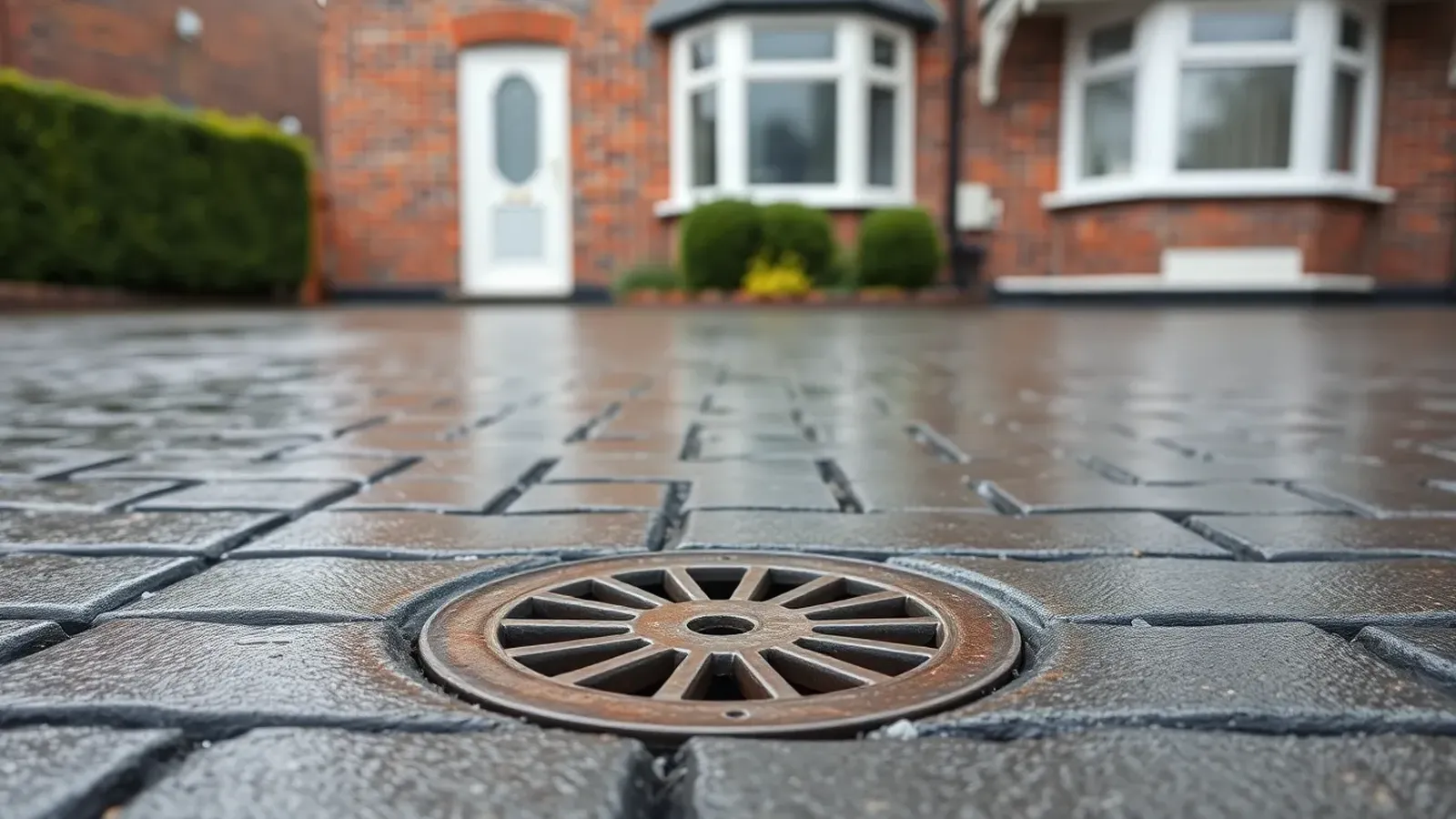
- Blockages in **yard gullies, rainwater downpipes and surface water drains** that only serve your property.
This is where a large proportion of our callouts sit. The drain under your front garden or rear yard, running from the stack to the boundary, is yours. If it blocks, United Utilities will not attend.
Section 104 Adoptions: A Wrinkle on New-Build Estates
If you live on a newer estate — anywhere built in the last 25 years across Widnes, parts of Kirkby, or new developments in Southport — your estate drainage may or may not have been formally adopted by United Utilities under Section 104 of the Water Industry Act 1991.
Until the developer completes the adoption process (which can take years after the houses are occupied), the estate drainage is maintained by the developer or a private management company. This creates a gap where neither United Utilities nor you are responsible — the management company is. Check your TR1 conveyance and any management company correspondence before ringing anyone.
How to Tell Which Side of the Boundary a Blockage Is On
This is the useful, practical part. On 95% of jobs, a five-minute site survey tells us who is liable.
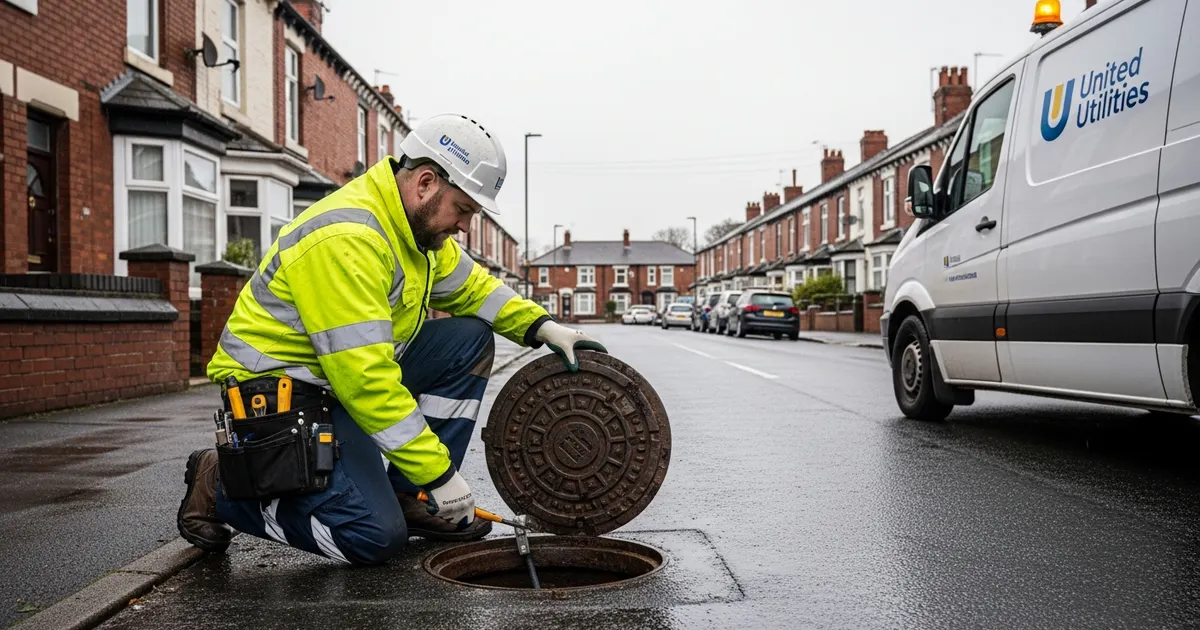
Step 1: Lift the Nearest Manhole
Most Merseyside properties have a manhole at or near the boundary — often in the front garden path or just inside the gate. Lift the lid (use a proper key, not a screwdriver) and look inside.
- **Manhole clear, water flowing** — the blockage is upstream, between the house and this chamber. That is yours.
- **Manhole full of foul water** — the blockage is downstream, past this chamber. Check the next manhole out towards the road.
Step 2: Check the Downstream Chamber
If the next chamber towards the road is also full, the blockage is in the public sewer or the lateral drain. Ring United Utilities on 0345 672 3723.
If the next chamber is clear and dry, the blockage is between the two chambers — the lateral drain section. After 2011, that is still United Utilities' problem.
Step 3: Look for Shared Use
If the manhole shows waste entering from more than one inlet (two or more properties), it is a shared drain — post-2011, that is United Utilities'.
We covered the manhole-lifting technique in more detail in our guide to early warning signs of a blocked drain.
When to Contact United Utilities and When to Contact Us
Ring **United Utilities** first if:
- Foul water is backing up from a manhole in the road or pavement.
- Sewage is appearing inside your home and you have confirmed the blockage is past your boundary.
- You have a shared drain blockage and neighbours are also affected.
- There is a suspected collapse or sink-hole in the public highway.
Ring **Blocked Drains Liverpool** if:
- The blockage is inside your property boundary.
- You need same-day clearance and UU's response time is too slow.
- You want a CCTV survey, lining, or excavation carried out on a private section.
- You need a full drain repair on a section United Utilities have confirmed is yours.
We also attend as a paid private contractor on urgent jobs where customers do not want to wait for UU's response window — particularly where internal flooding is imminent. Our emergency drain services team operates 24 hours and we can recover our fee from UU in some cases where the blockage is later confirmed to be on the public side.
Misuse Charges — The Sting in the Tail
If United Utilities attend and clear a blockage in the public sewer, then trace wipes, cotton buds or fat directly back to your property, they can issue a misuse charge — the amount depends on their assessment and rises for repeat offenders. Commercial kitchens in Bootle and Birkenhead without adequate grease management have faced significant charges of this kind.
The practical lesson: a small amount of diligence about what goes down the sink and the loo is cheaper than the alternative.
When It Is Unclear
On older properties in Walton and Huyton, the drainage layout is sometimes ambiguous — a drain that looks private may, in fact, have been serving two properties for a century. If there is any doubt, we will lift covers, trace the run, and produce a simple sketch before any work commences. That evidence is what you need to argue ownership with United Utilities if they initially decline.
For buyers inheriting unknown drainage, our pre-purchase survey includes a full run trace and manhole-by-manhole report. If you are already in dispute with UU or your insurer over a drainage issue, see our guide to using a CCTV survey for insurance claims for the evidence standards required.
If you are unsure who owns the drain, lift the nearest cover and request a quote online. We will talk you through what you are looking at, tell you honestly whether this is a UU job, and only attend if it is actually ours to solve.