Root ingress is the single most common structural cause of drain failure we see across Merseyside. It is not a dramatic event like a collapse or a sudden flood — roots enter drains slowly, often over years, and the symptoms creep up until one day a minor blockage refuses to clear. By that point, the pipe is usually already compromised.
Liverpool is more susceptible than most UK cities, for reasons that are partly historical and partly horticultural. Understanding why helps you spot the signs earlier and make better decisions about repair.
Why Roots Enter Drains in the First Place
Tree roots do not "seek out" water in the way popular articles suggest. They grow opportunistically in the direction of moisture and available oxygen, and a drain offers both. A clay pipe joint sealed with original hemp-and-cement mortar is effectively a thin band of degraded material between two sections of pipe. When the mortar shrinks, cracks, or is displaced by ground movement, a tiny amount of moisture vapour escapes into the surrounding soil. Fine root hairs detect that moisture gradient and grow toward it. Once a single hair is through the joint, it thickens over successive growing seasons, prising the joint open and giving larger roots access.
By the time a root mass is large enough to catch paper, wipes, or solids and cause a noticeable blockage, the pipe joint itself is almost always already damaged.
Why Liverpool Is Particularly Vulnerable
Three factors combine to make Liverpool's drainage stock unusually exposed:
**The age and material of the pipes.** The vast majority of properties in inner Liverpool — Victorian and Edwardian terraces across Toxteth, Wavertree, Anfield, Kensington, and Walton — were built with salt-glazed clay pipes laid in short 600mm sections. Every joint is a potential entry point, and there is a joint every two feet along the run.
**The tree canopy.** Liverpool has one of the largest street-tree populations of any English city outside London, much of it planted in the late 19th century at the same time the drains were laid. The trees and the pipes have been growing together for 130 years.
**The soil and ground movement.** Much of south and east Liverpool sits on boulder clay, which shrinks and swells seasonally. That movement stresses old clay pipework and opens joints that roots then exploit.
Species Most Likely to Cause Problems
Not all trees are equal offenders. The ones we most frequently find implicated in drain damage across Merseyside are:
- **London plane (Platanus × acerifolia)** — the dominant street tree in Sefton Park, along Aigburth Road, and through the avenues around Princes Park. Planes are deep, vigorous, and actively aggressive toward old clay drains.
- **Sycamore (Acer pseudoplatanus)** — extremely common as self-seeded specimens in back gardens across the city. Often not the tree the homeowner thinks of when they wonder what might be in the drain, because nobody planted it.
- **Ash (Fraxinus excelsior)** — widespread along older residential roads in Huyton and Knowsley. Ash roots travel laterally for considerable distances.
- **Silver birch (Betula pendula)** — heavily planted in post-war estates in Kirkby and across north Liverpool. Shallow, fibrous, and particularly good at entering shallow-buried plastic drains.
- **Willow and poplar** — less common on streets but frequent in gardens backing onto watercourses, particularly around the inland edges of Southport and the low-lying land north of Crosby.
The tree-lined avenues around Sefton Park, Calderstones, Mossley Hill, and the terraces flanking Princes Park see more root-related drain callouts per street than anywhere else in our coverage area. If you live on one of these roads and have never had a CCTV survey, it is worth considering one proactively.
Warning Signs of Root Ingress
Root blockages produce a distinctive pattern of symptoms:
- **Recurrent slow drainage** that clears temporarily after rodding but returns within weeks or months.
- **Seasonal worsening** in spring and early summer, when root activity peaks.
- **Gurgling from ground-floor toilets or gullies** after a shower or bath upstairs.
- **Patches of unusually lush grass or vigorous weed growth** along the line of a drain run in the garden.
- **Subsidence of slabs, paving, or driveways** directly above an older drain.
These signs overlap with other blockage causes — our post on the seven warning signs of a blocked drain covers the symptoms common to all types — but recurrence after clearance is the signature of roots specifically. A fat blockage, once cleared, tends to stay cleared for a long time. A root blockage comes back.
Diagnosis: Why CCTV Is Essential
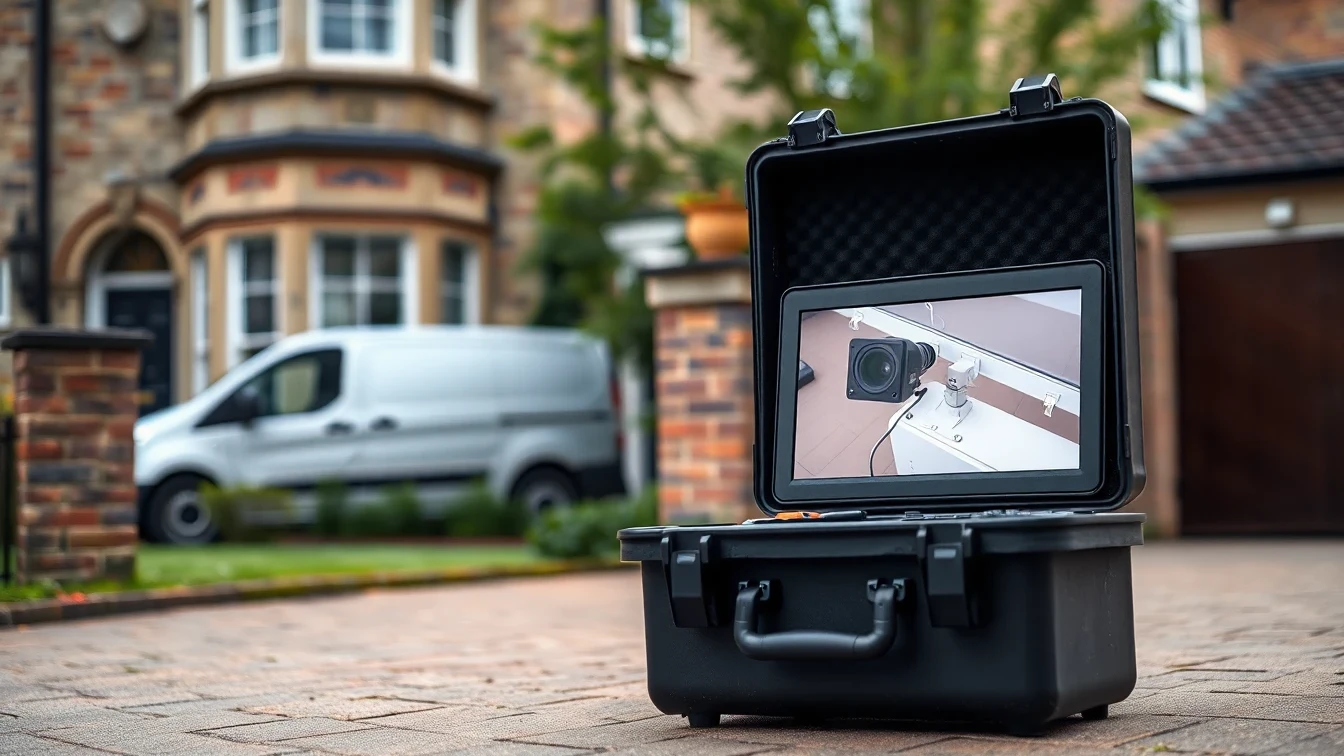
You cannot plan a root repair without seeing what you are dealing with. A blind rodding or jetting session might clear the symptom but tells you nothing about the state of the pipe beneath. Our CCTV drain surveys produce a full video record of the pipe interior, the exact location of the ingress measured from the manhole, the severity of pipe deformation, and the length of compromised joint.
From that survey we can tell you:
- Whether the pipe is structurally sound with a single point of ingress, or degraded along a length.
- Whether the root is growing through a joint, a crack, or a completely fractured section.
- The depth and material of the pipe, which determines the repair options available.
We provide the survey footage on a USB stick or download link as standard, along with a written report identifying defects against the WRc Manual of Sewer Condition Classification — the national standard insurers and buyers' solicitors expect.
Remedy Options
Mechanical Cutting
For a single ingress point in an otherwise sound pipe, a rotating root cutter drawn through the drain by our jetting unit will clear the root mass back to the pipe wall. This is the cheapest option and typically the first stage of any root job, but on its own it is a temporary fix — the roots will regrow, usually within 12–24 months.
Chemical Treatment
A foaming root herbicide applied immediately after mechanical cutting can delay regrowth by several years. It kills the root tissue in contact with the foam without harming the parent tree. We use dichlobenil-based products where appropriate, but only where the pipe structure justifies it — there is no point treating a pipe that is going to need relining regardless.
Patch Lining
Where ingress is confined to one or two joints, a localised resin patch can be installed at the affected joint without excavation. The patch forms a permanent seal that roots cannot penetrate, and leaves the rest of the pipe untouched.
Full Pipe Relining
Where multiple joints along a run are compromised — the common situation in older Victorian terraces — the practical answer is a cured-in-place liner covering the whole run. A resin-saturated felt sleeve is inverted into the pipe, inflated against the walls, and cured in situ to form a new jointless pipe inside the old one. The process is covered in detail in our service page on pipe relining and eliminates every potential root entry point in a single operation.
Excavation
Where the pipe has collapsed, deformed beyond the limits of lining, or where the depth and access allow, open-cut excavation and replacement with modern plastic pipe remains the definitive solution. For the decision between relining and excavation see our full guide on drain repairs.
Prevention
You cannot stop a 100-year-old plane tree from sending roots through your Victorian drainage. What you can do is:
- **Survey proactively.** If you have mature trees within 10 metres of a drain run and have never had the pipes inspected, book a CCTV survey. Catching ingress early makes patch lining viable — ignoring it until collapse forces excavation.
- **Replace failing sections rather than patching repeatedly.** A drain that has been rodded four times in three years is telling you it needs a structural repair.
- **Think carefully before planting.** A silver birch planted 3 metres from a drain run will cause problems within 15 years. The RHS guidance on minimum planting distances from drains is worth reading before you buy.
If you live on one of the tree-lined streets of south Liverpool, or in an older property anywhere across Birkenhead, Bootle, or the central Liverpool postcodes, and you have noticed any of the warning signs above, a survey pays for itself the first time it averts an emergency callout. Request a quote online to arrange one — Blocked Drains Liverpool covers the whole of Merseyside with fixed-price surveys and no call-out fees.