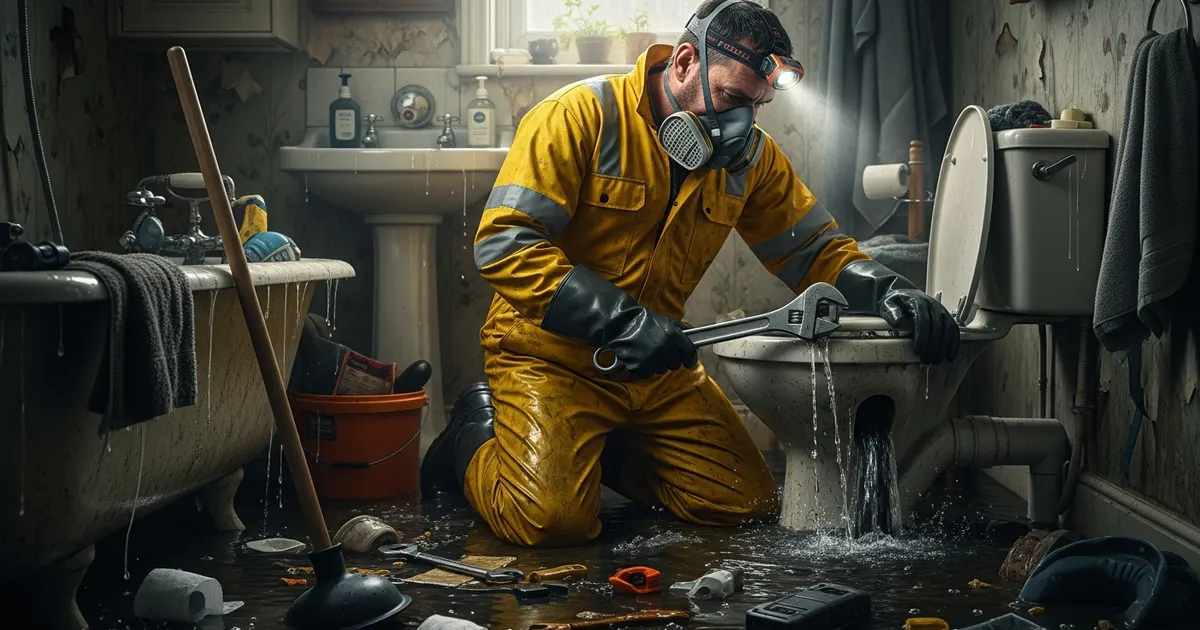
A sewage backup is the worst category of drainage emergency. It is not just water damage — it is biologically hazardous waste entering living space, with risks to health, to property, and to anything absorbent it touches. The first 60 minutes after you discover it shape the next several weeks.
This guide is written as a sequence. Follow it in order. We respond to sewage emergencies across Merseyside every week, and the households who act methodically in the first hour are the ones whose insurance claims settle cleanly and whose kitchens and hallways come back to use fastest.
1. Stop Using Water — Everywhere
The single most important action, before anything else, is to stop all water use in the property. That means:
- No flushing any toilet.
- No running taps.
- No showers, baths, or basins.
- Stop the washing machine and dishwasher mid-cycle if they are running.
- Isolate any automatic systems — water softeners that regenerate on a timer are a common culprit.
A sewage backup means the drain is blocked between your house and the sewer. Anything you add to the drain has nowhere to go except up. The backup will get worse with every litre you add. Tell everyone in the household, including children, before you do anything else.
2. Electrical Safety
Standing sewage on a floor is a live electrical hazard if it contacts sockets, extension leads, or appliance cables. Before you enter the affected area:
- At the consumer unit, turn off the circuits feeding the affected room or floor. If you are not sure which they are, turn off the whole consumer unit.
- Do not enter standing water if you have any reason to suspect live electrics are in contact with it.
- If sewage has reached a socket, a fuseboard, or an appliance, do not re-energise that circuit until an electrician has inspected and certified it.
This is not theoretical. We have been called to jobs where well-meaning homeowners started wet-vacuuming sewage with a mains-powered vacuum plugged into a socket six inches above the waterline. The risk is real.
3. Ventilate — But Don't Heat
Open windows and external doors to the affected area. Airflow reduces aerosol concentration and bioaerosol buildup, both of which are genuine health hazards in a sewage event.
Do not turn up the heating. Warm temperatures accelerate bacterial growth and odour generation. In winter, keep radiators off in the affected room until the cleanup has happened. If central heating has pipework near the affected floor, consider turning the whole system off at the programmer.
4. Do Not Touch
This is the hardest instruction because the instinct is to mop it up. Resist it.
Sewage contains E. coli, hepatitis A, rotavirus, Cryptosporidium, and a long list of other pathogens that cause genuine illness. Domestic mops, buckets, and cloths cannot decontaminate. Clothing that contacts sewage is a write-off. The cleanup equipment used for a Category 3 water loss — which is what this is — is professional-grade for reasons.
If you must enter the area to isolate electrics or to access controls:
- Wear rubber boots, not trainers.
- Long sleeves and gloves.
- Wash hands thoroughly immediately after leaving the area.
- Change clothing and bag it separately.
Do not eat, drink, or smoke in the affected area. Do not touch your face.
5. Protect What You Can Without Wading In
From the doorway, with gloves on, you can reasonably:
- Lift small rugs and portable items clear if they are not yet soaked.
- Raise the corners of furniture onto bricks, tiles, or tin foil blocks to stop wicking into legs.
- Close doors to adjacent rooms to limit aerosol spread.
- Move food from affected cupboards to a clean area — anything that was in contact with water surface should be disposed of regardless of packaging.
Do not move anything that is already wet. Leave it where it is. Movement spreads contamination and complicates insurance assessment.
6. Document Before Cleanup
Before a professional arrives and certainly before cleanup begins:
- Photograph every affected room, from multiple angles.
- Photograph the water level on walls, skirting, and furniture.
- Photograph visible contents — carpets, rugs, soft furnishings.
- Record a short video walking through the affected area.
- Note the time you discovered the backup and the time you took each action.
Insurance assessors work from evidence. Claims without photographic documentation of the original condition are routinely reduced or disputed. A 5-minute photograph session is the best-paid 5 minutes of your week.
7. Call a Professional Drainage Company
Request a quote online at this point. Explain it is a sewage backup and describe what you have done so far. The information we need from you:
- Your postcode and access.
- Approximately where the sewage is coming up — which fixture, which floor.
- Whether it is still rising, stable, or going down.
- Whether you have been able to isolate electrics.
A sewage emergency response typically involves an engineer on site promptly, with urgent jobs prioritised, in the Merseyside area. The immediate job is to identify and clear the blockage so the drain stops surcharging, then to camera the run to understand what caused it.
The cleanup — the decontamination of the affected rooms — is a specialist second stage. Some drainage companies (including ourselves) subcontract to flood restoration specialists; others do both in-house. Ask before committing.
For broader emergency-drain guidance and what professional response looks like, see our emergency drain problems guide.
8. Call Your Insurer
Your home or contents insurer needs to know on day one. Every policy has a notification deadline — usually 48 or 72 hours — and missing it complicates settlement. You do not need to have figured out cause or cost. You need to register the incident with a reference number.
Questions the insurer will ask:
- When did you discover it?
- What have you done to mitigate further damage?
- Have you engaged a drainage contractor?
- Can you provide photographs?
Having already done items 1 through 7 above answers all of these.
For a complete picture of the survey evidence insurers expect, our guide on drain surveys for insurance claims covers the documentation requirements.
9. Understand the Responsibility
The cause of a sewage backup determines who pays for the repair to the drain itself — though not usually for the cleanup, which is your insurer's business either way.
- **Internal fixtures or private pipework on your property** (from the house to the property boundary, broadly): your responsibility. This is where internal drain unblocking and downstream repair work sits.
- **Shared drainage serving more than one property:** adopted by United Utilities since the 2011 transfer. United Utilities' responsibility to unblock and repair.
- **Public sewer in the highway:** United Utilities.
If the backup is caused by a sewer surcharge during flash rainfall, the conversation is with United Utilities under their sewer flooding protocol, which includes compensation in some cases. Our background guide to United Utilities sewers in Merseyside sets out the framework.
10. Who Cleans Up
The drainage contractor clears the blockage. The cleanup — extraction, disinfection, drying, replacement of porous materials — is typically handled by a flood restoration specialist working on instruction from your insurer. Carpets, underlay, MDF skirting, and plasterboard up to the waterline are almost always replaced rather than cleaned, because decontamination of porous materials to clinical standards is not possible at domestic scale.
Expect the restoration phase to take two to six weeks from incident to re-occupation of the affected rooms. Rented temporary accommodation during that period is a claimable cost under most policies.
What Not To Do
- Do not use bleach on sewage. It does not decontaminate effectively and generates toxic vapour when mixed with ammonia in urine.
- Do not use a household wet vacuum. The exhaust aerosolises pathogens.
- Do not try to clear a blockage with boiling water or drain cleaner — in a backup situation, you are adding fluid that will surcharge into your home.
- Do not delay the call. Sewage in contact with absorbent materials becomes more expensive every hour.
Blocked Drains Liverpool operates a 24-hour emergency response across Merseyside — Liverpool, Bootle, Walton, Huyton, and the wider area. If you are dealing with a sewage backup now, request a quote online and we will be on the way.