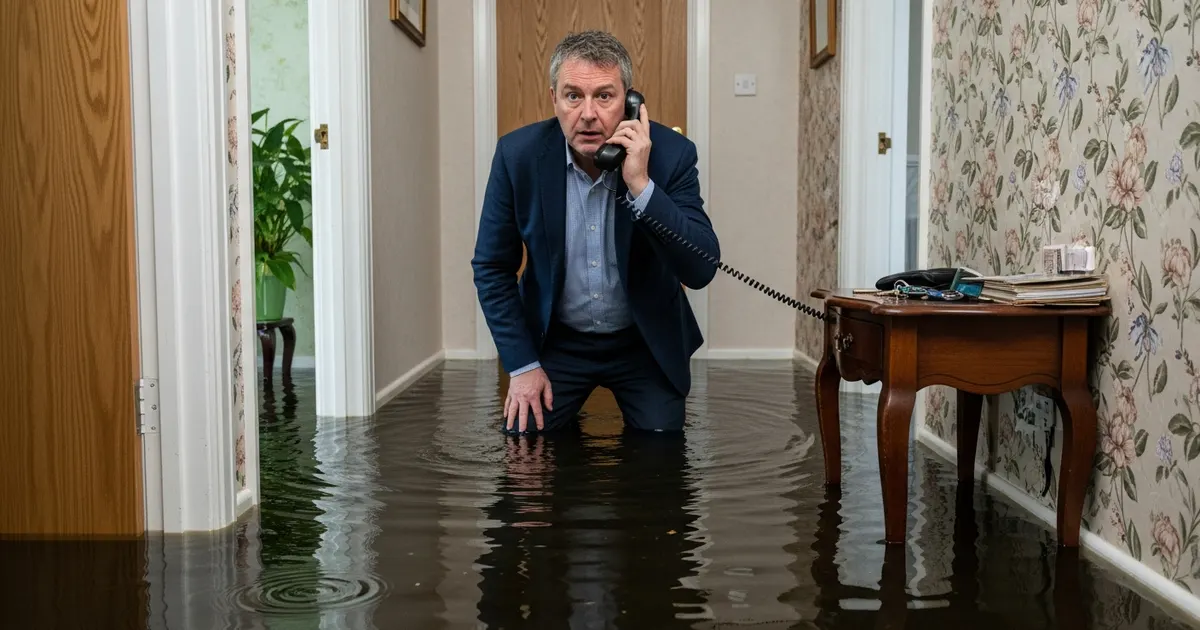
A drain emergency can strike at any time, often at the most inconvenient moment. Whether it's sewage backing up into your home, a blocked drain causing flooding, or a collapsed pipe, knowing what to do in the first few minutes can significantly reduce damage to your property.
Recognising a Drain Emergency
Not every drainage problem is an emergency, but these situations require immediate action:
- Sewage backing up into your property
- Water flooding from drains
- Multiple drains blocked simultaneously
- Strong sewage smell inside your home
- Visible sewage in your garden or driveway
Immediate Steps to Take
1. Stop Using Water
As soon as you realise there's a serious problem, stop all water usage in your property:
- Don't flush toilets
- Don't run taps or showers
- Don't use the washing machine or dishwasher
- Turn off any appliances that drain water
Every additional bit of water you put into the system will make the problem worse.
2. Protect Your Property
If water or sewage is entering your home:
- Move furniture and valuables away from affected areas
- Roll up rugs and carpets if possible
- Use towels or sandbags to create barriers
- Open windows to ventilate the area (sewage gases can be harmful)
3. Turn Off Water Supply
If water is continuously flowing and you can't stop it, locate your stopcock (usually under the kitchen sink or near the front door) and turn off the main water supply to your property.
4. Avoid Contaminated Areas
Sewage contains harmful bacteria and pathogens. Keep children and pets away from affected areas. If you must enter a flooded area:
- Wear rubber boots and gloves
- Avoid touching your face
- Wash thoroughly afterwards
- Don't eat or drink in the contaminated area
5. Document the Damage
Once you've done what you can to limit the damage:
- Take photos and videos of affected areas
- Note the time the problem started
- Record any damage to belongings
- Keep this information for insurance claims
Common Emergency Drain Causes in Liverpool
Understanding what typically triggers drain emergencies in Merseyside can help you anticipate problems — and react faster when they occur.
**Heavy rainfall** is the most frequent trigger for drainage emergencies across Liverpool. The city's combined sewer system — which handles both surface water and foul waste in a single pipe — can become overwhelmed during intense or prolonged rainfall. When the sewer backs up, the overflow has nowhere to go except back up through the lowest drain in a property, which is often a ground-floor toilet or a cellar drain. Properties in low-lying areas of the city, including parts of Toxteth, Dingle, and Garston, are particularly vulnerable.
**Autumn leaf fall** causes a surge in blocked external drain calls every October and November. Leaves from Liverpool's many mature street trees collect in gully drains and grid covers, building up until the drain is completely blocked. During heavy rain this can cause rapid surface flooding in back yards and gardens.
**Christmas and New Year** consistently produce one of the busiest periods for emergency drain callouts. The combination of large family gatherings, heavier cooking, more fats and grease going down kitchen sinks, and increased toilet usage places enormous strain on domestic drainage systems. Boxing Day and the days immediately following New Year are traditionally among the highest-demand days of the year for emergency drainage services.
**Freezing temperatures** in January and February can cause water trapped in partially blocked pipes to freeze and expand, cracking the pipe wall. The blockage then becomes a collapsed pipe, turning a manageable problem into a major repair.
**Ground movement after dry summers** is increasingly common. A prolonged dry period followed by heavy autumn rain causes soil to shrink and then swell, putting stress on underground pipe joints. This is a recognised issue in the clay-rich soils found across parts of Merseyside.
If you recognise any of these seasonal risk factors, an advance call to book a CCTV drain survey before the risk period arrives can save you from a full emergency callout later.
What NOT to Do
Don't Use Chemical Drain Cleaners
In an emergency situation, pouring chemicals down the drain won't help and could make things worse. These products are designed for minor blockages, not major problems. In a sewage backup scenario, caustic chemicals in the pipe can react dangerously with waste material and create harmful fumes. They can also damage rubber seals and joints in older pipework.
Don't Try to Access the Sewer
The main sewer runs under your property and connects to the public sewer. Never try to access or clear this yourself. It's dangerous and often illegal without proper authorisation. Sewer gases — including hydrogen sulphide and methane — accumulate in underground chambers and can be fatal within seconds. Only qualified drainage engineers with appropriate gas detection equipment and confined-space training should enter or work at the sewer level.
Don't Ignore the Problem
Some people hope a drainage problem will resolve itself. It won't. Delaying action only allows more damage to occur and can significantly increase repair costs.
Don't Pour More Water In
It sounds obvious, but in a panic people sometimes try to flush the toilet repeatedly or run the tap to "push the blockage through". This makes the situation significantly worse by introducing more volume to an already overloaded system. The only water-related step that can help is turning the main stopcock off to prevent further water entering the system.
Don't Attempt High-Pressure DIY Clearing
Handheld drain rods or small consumer-grade pressure washers are not suitable for use in an emergency blockage. Used incorrectly, they can push a blockage further down the line, dislodge a displaced pipe joint, or cause a crack in an already stressed pipe. In a serious emergency, wait for professional equipment.
While Waiting for Help
Once you've called a professional drainage company, there are a few more things you can do:
- Clear access to manholes and inspection chambers
- Make note of where water is entering or backing up
- Check if neighbours are experiencing similar problems (this might indicate a shared sewer issue)
- Keep your phone charged in case the engineer needs to contact you
Requesting Emergency Help
When you request emergency assistance from Blocked Drains Liverpool online, we'll ask:
- Your address and postcode
- What symptoms you're experiencing
- When the problem started
- Whether it's affecting multiple properties
- Your contact details
We aim to arrive promptly, with urgent jobs prioritised, for emergency callouts across Liverpool, Wirral, Bootle, and Merseyside. Our emergency drain services team is available 24 hours a day, 7 days a week.
Whether you're dealing with a flooding emergency or a sewage emergency, our engineers carry specialist equipment including CCTV cameras and high-pressure jetting to diagnose and resolve problems on the first visit.
After the Emergency: What Happens Next
Once the immediate crisis is resolved, it is important to understand what caused the problem and whether longer-term work is needed.
A CCTV drain survey after clearing an emergency blockage is strongly recommended, particularly if the cause was not obvious or the problem has occurred before. The camera reveals the true state of the pipe — whether there is structural damage, a partial collapse, root intrusion, or a misaligned joint that is likely to cause the next emergency if left untreated. Many homeowners are surprised to discover that what felt like a one-off emergency was actually the inevitable consequence of a structural problem that had been developing slowly for years.
If flooding or sewage backup has caused damage to your property or belongings, your home insurance may cover the loss. Our engineers can provide a written report and photographs documenting the nature and cause of the emergency, which your insurer will need. Ask for this at the time of the callout.
If the emergency appears to originate in a shared drain or the public sewer, you may also need to contact United Utilities — the water company for the north west of England — in addition to calling a drainage engineer. United Utilities are responsible for the public sewer network, the section beyond your property boundary. Our engineers will advise you on where the responsibility boundary lies.
If the emergency was caused by a structural problem — a collapsed pipe, displaced joint, or root-infested run — you will need drain repairs to prevent recurrence. We offer pipe relining as a cost-effective, no-dig alternative to excavation in many cases, with a 10-year structural guarantee.
Request urgent help online if you're experiencing a drain emergency, or request urgent help online.