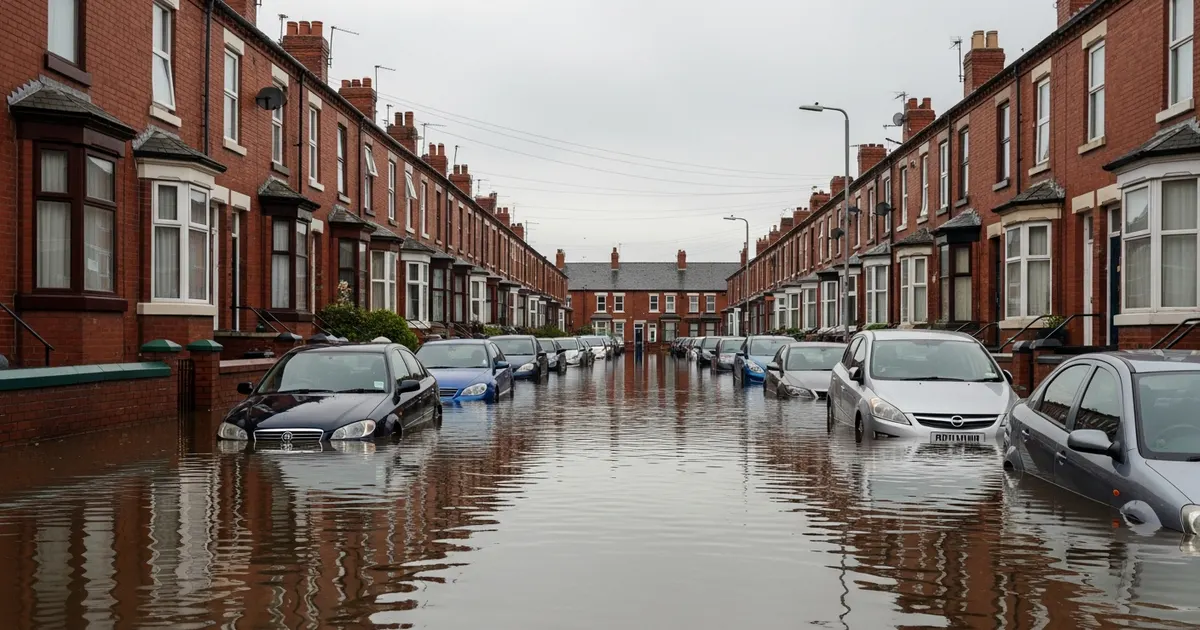
Surface water flooding — water that accumulates on the ground during or after heavy rainfall, overwhelms drains, and enters properties — is one of the least well-understood types of flood risk. In an urban area like Liverpool, the more common cause of properties flooding is rainwater that has nowhere to go. It overwhelms drainage systems designed for a lighter era of rainfall, and it follows the land's topography to the lowest point, which is often a front door.
This guide sets out what causes surface water flooding in the Liverpool area, who is responsible for which part of the drainage system, and what a drainage engineer can actually do to help you.
Surface Water Flooding vs River Flooding
River flooding — the Mersey overtopping — is the responsibility of the Environment Agency and is managed through flood defence infrastructure. Surface water flooding is caused by rainfall that cannot enter or pass through the drainage system fast enough. This type of flooding is driven by the local drainage network, and large parts of that network connect directly to private property drainage. That is where we work.
How Surface Water Drainage Works in Liverpool
Liverpool has a predominantly combined sewer network — a legacy of Victorian and Edwardian construction in which a single pipe carries both foul sewage and surface water run-off. When that combined sewer surcharges during heavy rainfall, both foul and surface water attempt to find alternative routes: back up through road gullies, through property connections, through manholes in back alleys.
In newer residential areas — Kirkby, parts of Knowsley — the drainage is usually separate. Culverted watercourses are a specific Liverpool problem: throughout the inner suburbs of Walton, Bootle, Everton, and Kensington, there are underground watercourses culverted in the 19th and early 20th centuries. During a heavy summer storm, a partially blocked culvert can cause localised flooding across an entire street within minutes.
Who Is Responsible for What
Liverpool City Council (Lead Local Flood Authority)
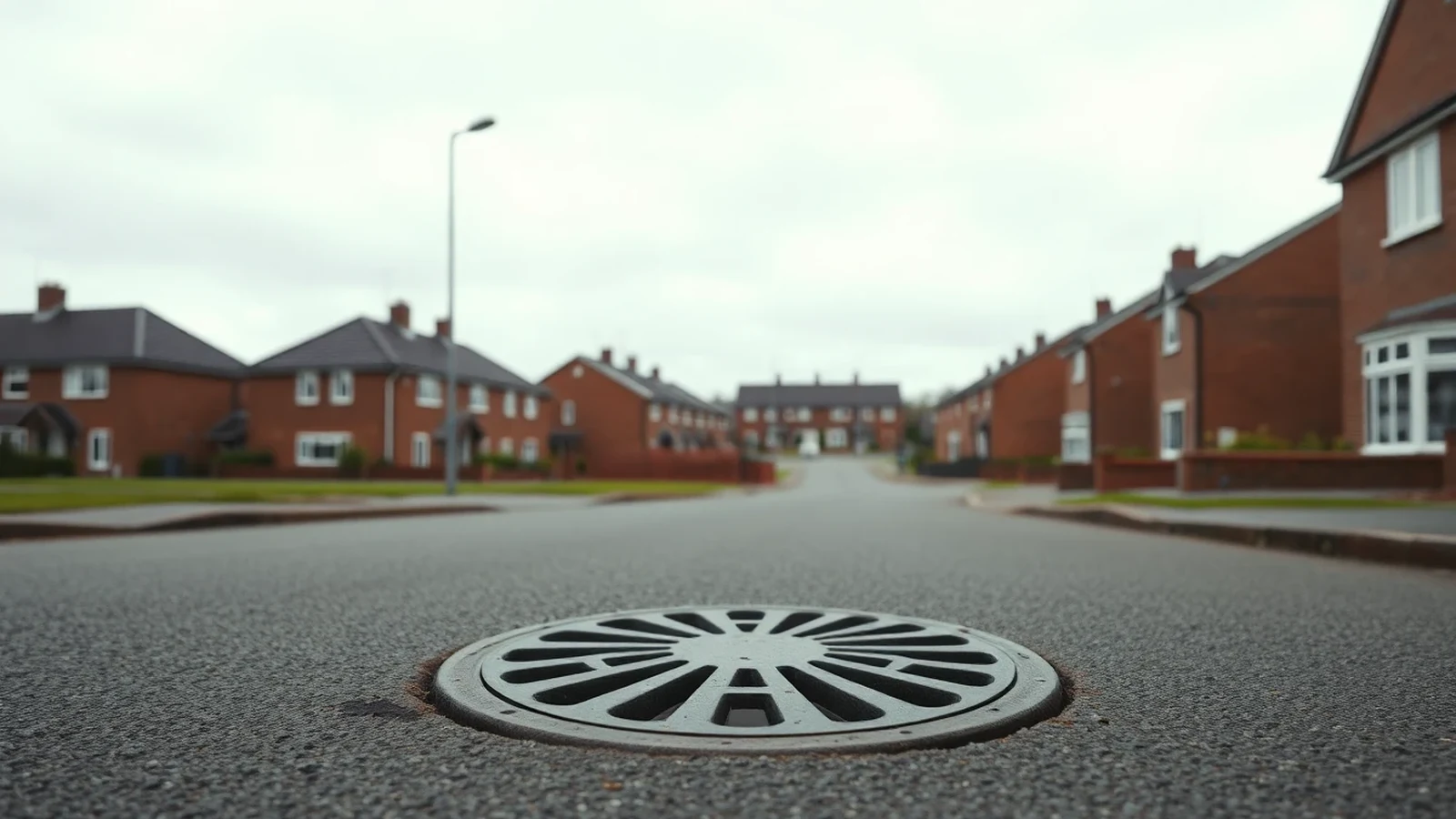
Liverpool City Council is responsible for maintaining highway gullies on adopted streets, managing culverted watercourses that cross public land, and coordinating the Surface Water Management Plan. If the highway gully outside your house is blocked and causing road flooding that enters your drive, the Council is responsible for clearing it. Report blocked highway gullies through their online portal.
Sefton Council holds the same role for properties in Crosby, Formby and Southport.
United Utilities (Sewer Authority)
United Utilities owns and maintains the public sewer network. When the public sewer surcharges during a storm and backs up into private property through shared lateral drains, United Utilities is responsible. If you suspect the flooding entered your property through the public sewer, report it to United Utilities and record the event thoroughly.
The Homeowner (Private Drainage)
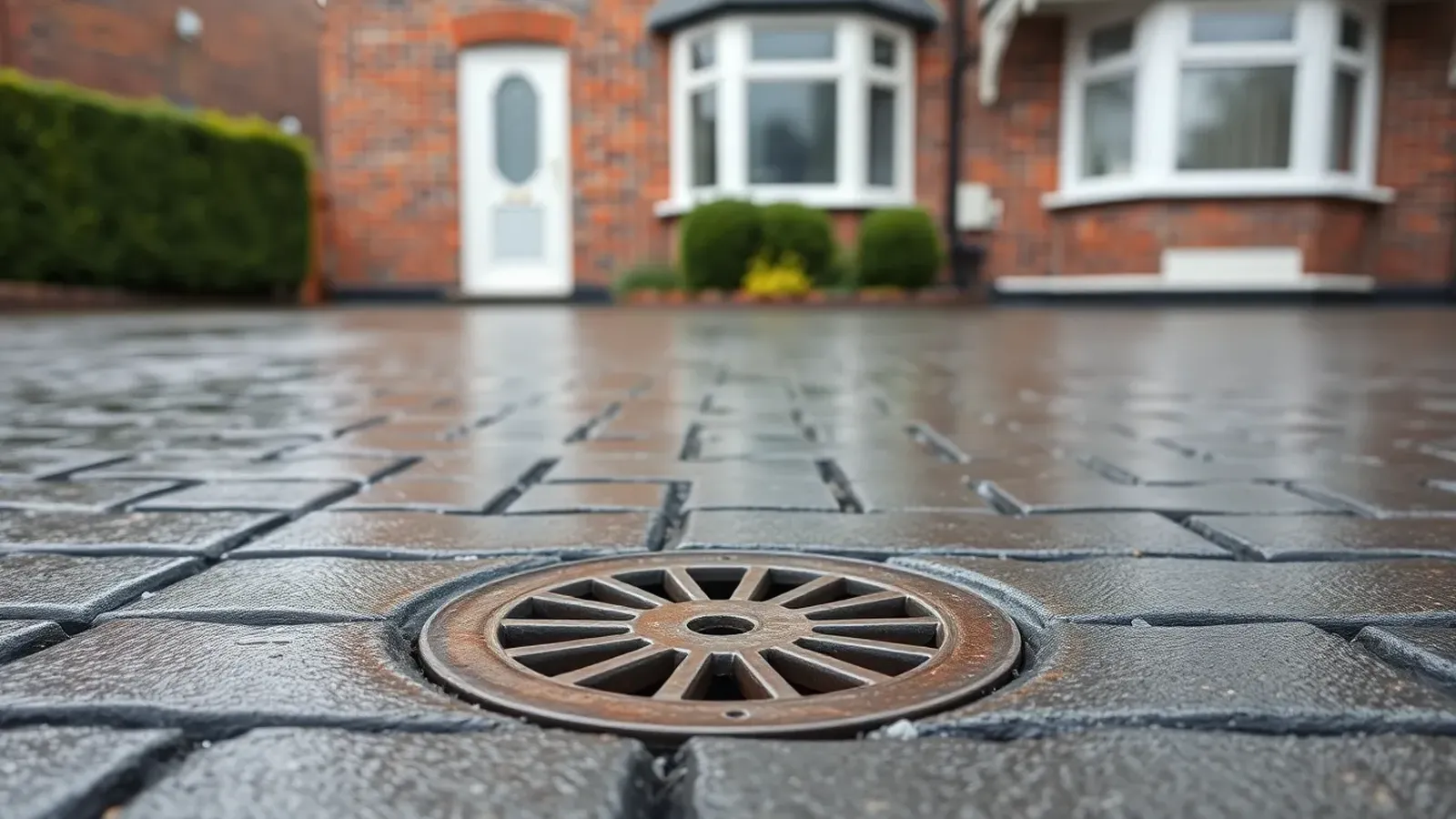
Everything within your property boundary that serves only your property is your responsibility — yard and driveway gullies, soakaways, channel drains, and private lateral drains connecting to the shared or public sewer.
What a Drainage Engineer Can Fix on Your Property
**Private gullies blocked or incorrectly connected.** Jetting clears them; a survey establishes where they drain.
**Soakaways saturated, silted, or undersized.** We can assess soakaway capacity, install replacements, or advise on connection to surface water drainage. The detailed guide is our post on soakaway problems and garden flooding.
**Channel drains and linear drainage.** Where surface water is flowing across a driveway and reaching the threshold, a channel drain across the access point intercepts it before it reaches the door. This is one of the most effective single interventions for properties with front-door flooding.
**Private gullies in back alleys.** Many Liverpool and Bootle terraces have shared gully points in back alleys that are technically private. We can clear, survey, and establish responsibility.
Insurance Implications
Before making a claim, document the event thoroughly: photographs, timestamps, water depth marks, and details of what drainage infrastructure is near the affected area. Our post on using a drain survey for insurance claims covers how CCTV evidence is used in the claims process, which applies equally to surface water flood events.
Request a quote online from Blocked Drains Liverpool. We will assess your private gullies, downpipe connections, and surface water drainage, and give you an honest appraisal of which elements are yours to fix and which need a referral to the Council or United Utilities. We cover Liverpool, Walton, Bootle, Crosby, and across Merseyside.