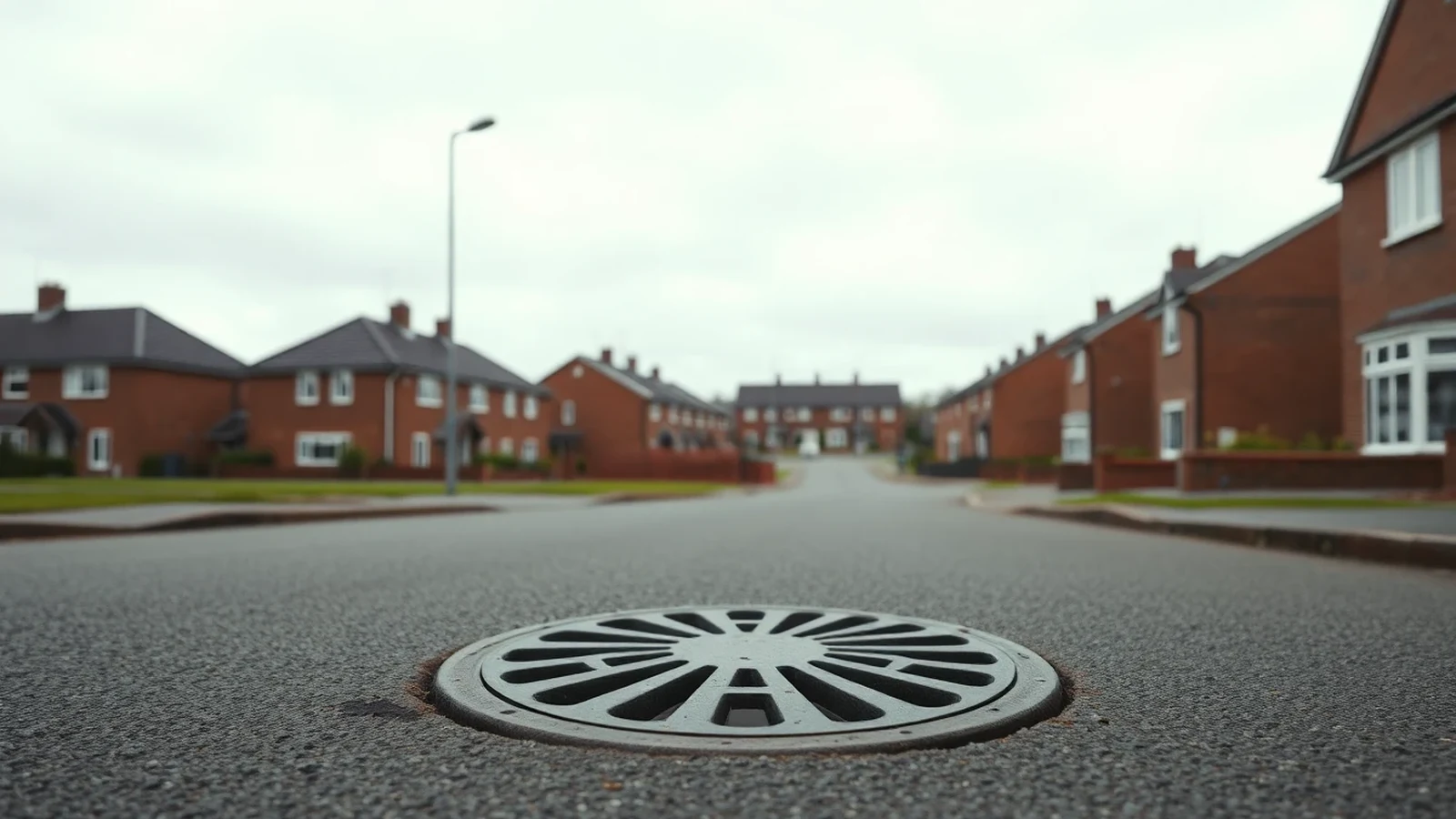
Outside drains are the part of a property's drainage most likely to block quietly and go unnoticed until water is running back across the yard or garden. They are also the part most likely to be misdiagnosed — a gully that is standing full of water is not always blocked at the gully itself. Understanding what type of external drain you have, how it connects to the rest of the system, and where blockages actually tend to occur is the difference between a ten-minute clearance and an hour of unnecessary work that leaves the problem untouched.
This guide is written from the perspective of the engineers at Blocked Drains Liverpool who attend blocked external drains across Merseyside on a daily basis. The patterns are consistent whether the property is a Victorian terrace in Walton or a 1970s semi in Kirkby.
Types of External Drain
Gully Traps
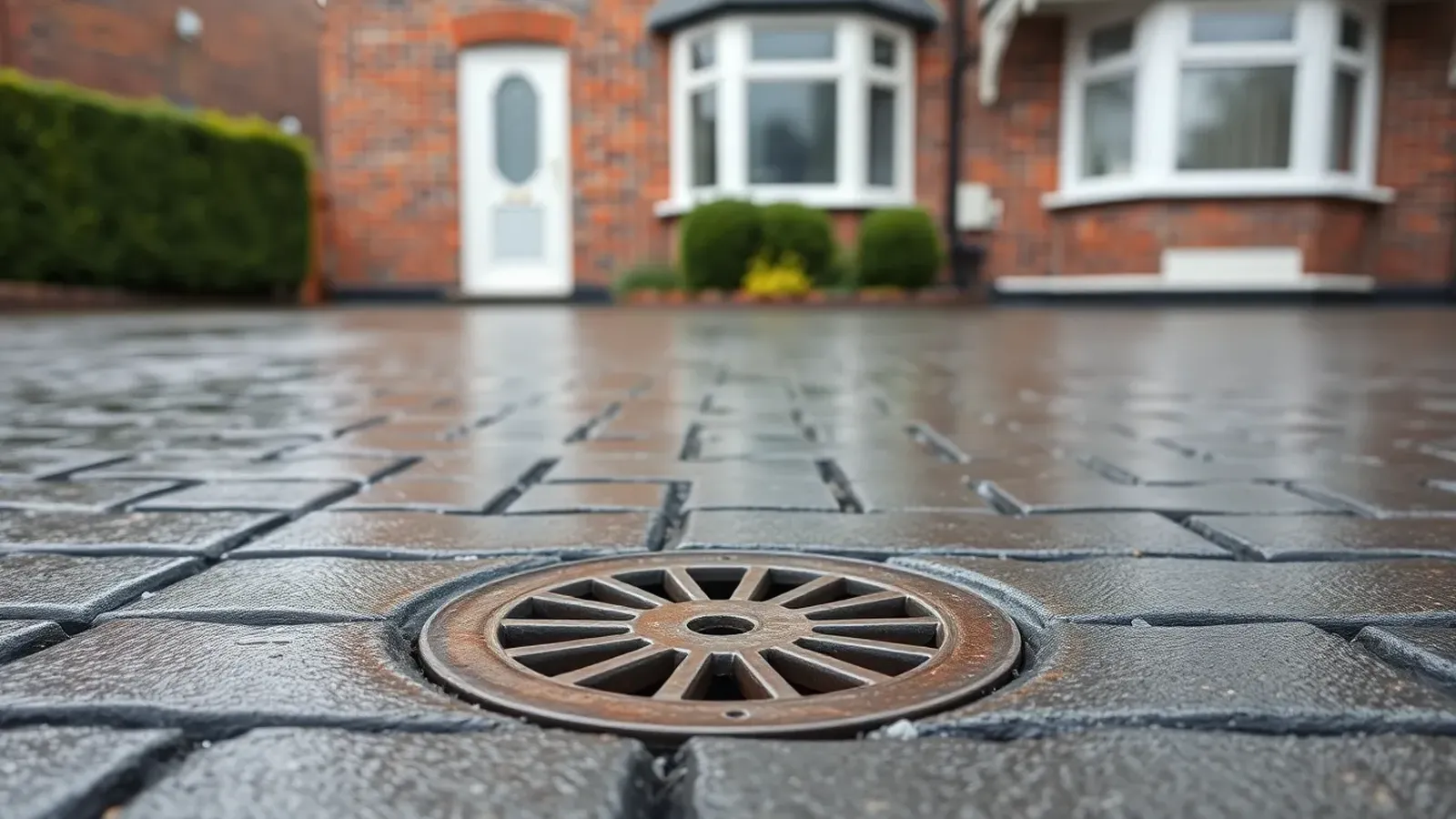
A gully is a ceramic or plastic pot set into the ground that collects water from a downpipe, a yard surface, or both. It contains a water trap — usually a P-trap built into the base — which holds a volume of water that seals the drain against sewer gases rising back into the air around the property.
In Victorian properties across Liverpool they are almost invariably the old ceramic hopper type — a wide, open-topped pot with a visible water level. In more modern properties they are plastic trapped gullies with a removable grid cover.
Channel Drains
Channel drains run linearly across the surface and collect sheet flow water into a long slot drain rather than a single point. In Crosby and Southport coastal properties, channel drains are common across driveways where surface-water management is critical.
Combined Drains
In most of Liverpool's Victorian stock, a combined system is in place — a single drain run takes both foul water from the house and surface water from the roof and yard. This means that a blockage in the combined run below the gully affects both surface water drainage and foul drainage simultaneously.
Common Causes of Blockage
Leaf and Debris Accumulation
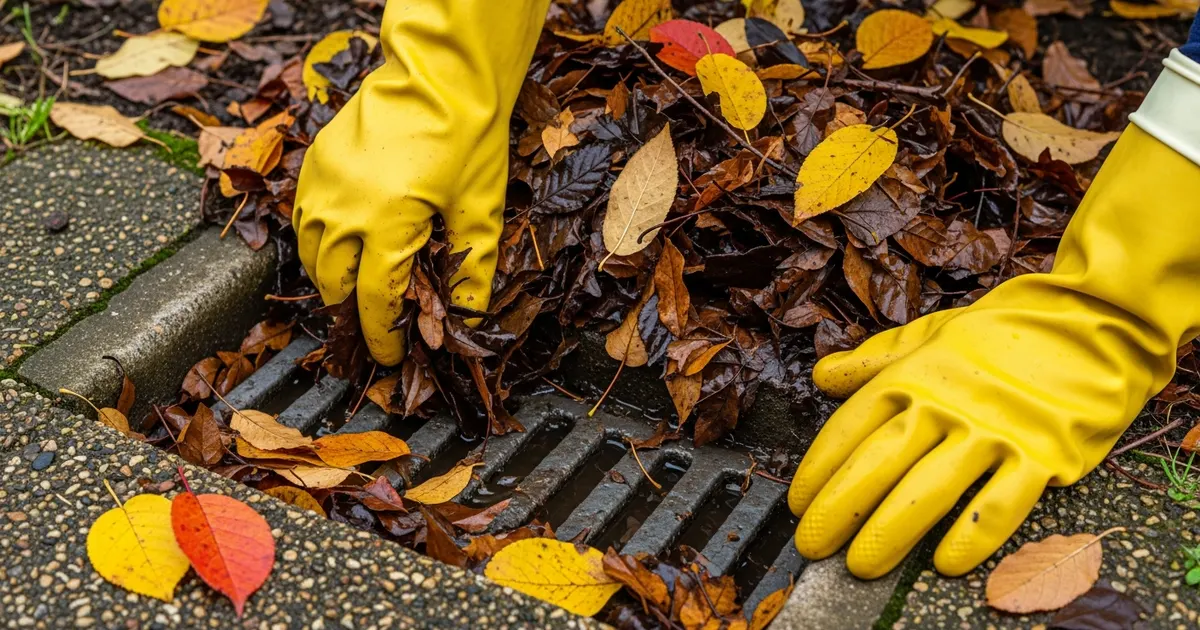
The most frequent cause of a blocked gully pot is accumulated leaf debris, moss, silt, and general detritus. This type of blockage is entirely at the gully itself — the drain below is clear.
Root Ingress
Tree roots in the drain run below the gully are a common cause of gullies that stand full even after the pot has been cleared. Liverpool's mature street trees — planes along the main avenues, sycamores in back gardens, birch and ash across post-war estates — are the predominant cause of root ingress, as we cover in detail in our guide to tree roots in drains Liverpool.
Fat and Grease
In combined drain systems, kitchen fats discharged through sink wastes gradually solidify on the internal walls of the pipe below the gully. This is particularly pronounced in shallow runs where the flow velocity is low.
Silt and Grit
Surface water carries fine grit, silt, and sand into the drain system. Where the drain has a low gradient — common in flat Liverpool terraces — this material settles out and forms a silt plug that gradually reduces capacity.
DIY Clearance: The Right Hierarchy
Step 1: Clear the Gully Pot
Before anything else, clear the gully pot by hand. If the water level drops promptly after clearing debris, the drain below is clear and you have found the problem. If the water level does not drop, the blockage is downstream.
Step 2: Hose Flush
A sustained hose flush directly into the outlet at the base of the pot will often shift a soft silt plug in the first metre of drain below the gully.
Step 3: Gully Rods
A set of gully rods allows you to push and rotate through the trap and into the first section of pipe below. Work slowly: push, rotate clockwise, push further. Do not rotate anti-clockwise (you will unscrew the rods). If you feel solid resistance that does not shift with moderate pressure, stop.
Step 4: Know When to Stop
Stop and call a professional when the gully pot is clear but the drain will not flow; foul water or sewage is backing up through the gully; or multiple gullies on the property are standing full simultaneously.
Signs the Problem Is Downstream
The most important diagnostic insight is that a full gully pot does not mean the gully is where the blockage is. A downstream blockage will cause any gully connected to that run to fill up. Signs that point downstream: multiple gullies backing up simultaneously; foul water rising through a yard gully; backing up in toilets or ground-floor sinks at the same time the external gully is overflowing.
In all these cases, professional drain jetting or a CCTV survey is the appropriate next step. Our drain unblocking service covers external drains, combined runs, and downstream blockages on a single fixed-price callout.
Liverpool-Specific Context
The back-entry yards of Liverpool's Victorian terraces present a specific challenge. The yard gully typically sits at the lowest point of a small concrete yard, connected via a short run to a shared drain in the back entry. That back-entry drain may serve four, six, or eight properties, and any blockage in the shared section will cause every individual yard gully to back up simultaneously.
If your outside drain blocks repeatedly despite regular clearance, the problem is almost certainly structural. A CCTV drain survey will confirm this and identify whether pipe relining or excavation is the right repair.
Blocked Drains Liverpool attends blocked outside drains across Liverpool, Bootle, Birkenhead, Huyton, St Helens, and the whole of Merseyside. We provide a fixed price before any work starts and carry jetting equipment on every van. Request a quote online — 24 hours a day, seven days a week.