A bath or shower that drains slowly is one of those problems people tolerate for weeks before ringing anyone. It creeps up — gradually longer to empty, water around the ankles at the end of a shower, a faint drain smell on warm days — until one evening it refuses to drain at all. At Blocked Drains Liverpool we attend blocked baths and showers across Merseyside every week, and the vast majority fall into a handful of predictable patterns.
This guide sets out what is actually blocking your bath or shower, how to clear it yourself where DIY is appropriate, and when the symptoms point to a bigger problem downstream.
The 90% Rule: It's Almost Always Hair
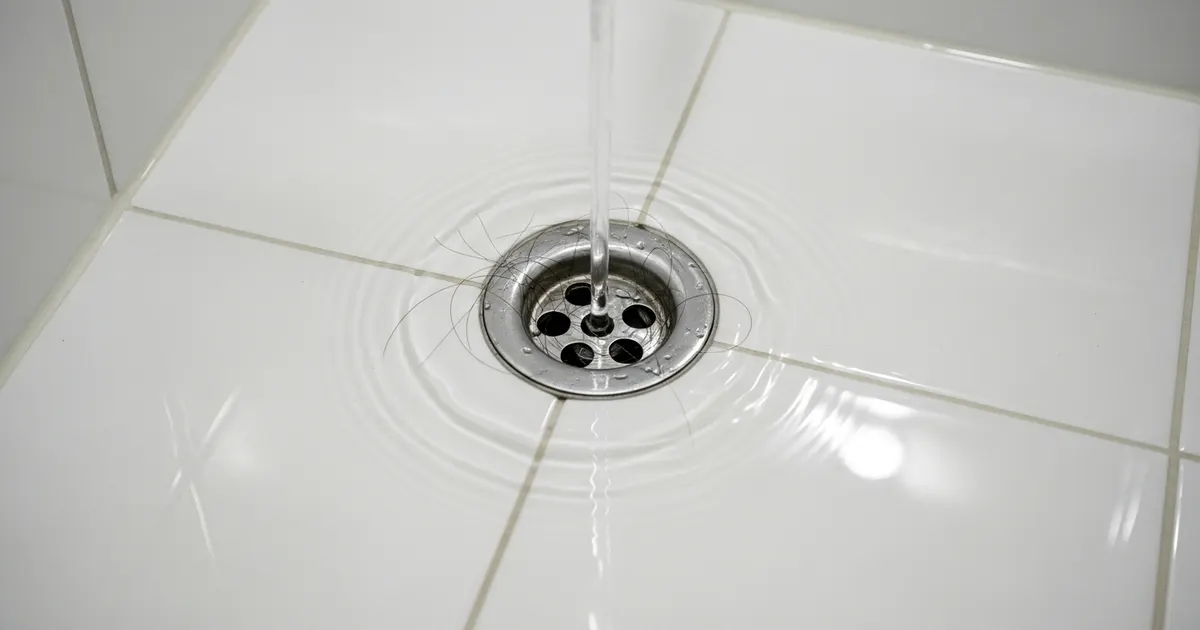
Nine out of ten domestic bath and shower blockages are hair combined with soap scum. Human hair is strong, it does not break down, and it binds with fatty acid soap residue to form a dense, felt-like mat. This mat accumulates around the crosshairs of the waste grate, in the trap, and at the first bend of the branch pipe.
Two facts make this worse in Merseyside:
- The water in much of central Liverpool, Bootle and Walton is moderately hard, encouraging soap scum formation.
- Traditional bar soap produces substantially more scum than liquid shower gel.
If you have used bar soap in a shared family bath for twenty years, the waste pipe is almost certainly carrying a hair-and-soap mat.
Understanding Your Trap
Before you try to clear the blockage, know what you are working with.
P-Trap
Most baths use a P-trap — a U-shaped bend below the waste outlet, designed to hold a water seal that stops drain smells rising. P-traps are relatively easy to access, usually by removing a bath panel, and can be dismantled by hand.
Bottle Trap
Shower trays and many basin wastes use a bottle trap — a cylindrical chamber with the outlet on the side. Bottle traps catch more debris than P-traps, are easier to clean, but are more prone to blocking if not maintained.
Shallow Traps
Walk-in and low-profile shower trays often use a shallow chamber trap designed to fit under a 40mm tray. These are the most blockage-prone of the three — the water seal is small and the chamber fills with hair very quickly.
DIY Hierarchy, In Order
1. The Zip-Tool
Before anything else, buy a plastic drain zip-tool — a flexible barbed strip about 50cm long. They cost a pound or two. Push it down through the waste grate, twist, and pull up. On a hair-caused blockage, this alone clears the problem in 30 seconds. It is the single most effective DIY tool for bath and shower blockages and we genuinely recommend every Merseyside household keeps one.
2. Remove and Clean the Waste Grate
Most modern waste grates unscrew by hand or with a single cross-head screw. Remove it, clean off the accumulated hair by hand, and reassemble. This alone clears partial blockages in many cases.
3. Plunger
A cup plunger (not a toilet plunger) can work on a fully blocked bath, but only if you block the overflow first. Without blocking the overflow, the plunger simply pushes water out of the overflow and generates no useful pressure. Wrap the overflow grate with a damp cloth held firmly in place by a helper, then plunge.
4. Dismantle the Trap
If the blockage persists, and you can access the trap (bath panel off, or shower tray accessible), unscrew the trap by hand, empty it into a bucket, flush it, and reassemble. Wear gloves — bath trap contents are unpleasant.
5. A Manual Hand Snake
For a blockage beyond the trap in the branch waste, a 3- to 5-metre hand snake can reach into the pipe and extract the mat. Work slowly, rotate gently, and avoid forcing it around bends.
Why "Natural" Remedies Underperform
Customers ask about baking soda, vinegar, lemon juice, and various other pantry solutions. The honest answer is that they do almost nothing against a hair mat. The chemistry of baking soda and vinegar produces a small amount of foam with no useful mechanical force. For hair combined with soap scum — the actual problem — the only effective removal is mechanical: a zip-tool, a snake, or dismantling the trap.
Hot water and washing-up liquid can help a slow drain caused by early-stage soap scum without a hair component, but these are rare in bathrooms.
Caustic Drain Cleaners: Avoid
Supermarket caustic drain cleaners work on fat (which is why they are reasonably effective in kitchens) but struggle with hair. The caustic does not dissolve hair quickly, it sits on top of the blockage, and when an engineer eventually attends they have to neutralise before working. We regularly attend bath blockages in Crosby, Kirkby and Huyton where the customer has poured caustic in and made the problem harder and more expensive to solve.
Signs It Is Not a Local Blockage
Escalate beyond DIY when any of the following are true:
- **More than one fixture is affected.** If the bath is slow and the basin is slow, the blockage is in the shared branch, not the bath trap.
- **Water backs up into the bath when the washing machine drains.** The blockage is downstream of both fixtures.
- **Gurgling from the bath when the toilet flushes.** Classic sign of a soil stack or main drain blockage — the water falling through the stack is drawing air back through the bath trap.
- **Foul smell, not just damp smell.** A damp smell is trapped water; a foul smell suggests sewage downstream.
- **You have cleared the trap and the pipe is still blocked.** The blockage is in the branch or main waste.
- **Ground floor bath only.** A ground floor bath blockage often indicates a main drain run issue — covered in our guide to early signs of a blocked drain.
What the Professional Will Do
When a blocked bath or shower has defeated DIY and an engineer attends, the process depends on where the blockage is.
For a trap or near-trap blockage, we remove and clear mechanically, often replacing the trap and washer as part of the callout. For a branch blockage, we use a small electric drain machine from the waste access or the next downstream point — typically a manhole. For a main drain blockage causing backup into upstairs baths, we clear from the external manhole with rods or a jetter.
Our blocked bath service covers all three scenarios on a fixed-price callout, and forms part of our wider drain unblocking work across Merseyside. If the blockage recurs within weeks, we recommend a short CCTV inspection to identify any branch pipe defect — sagging, pitch fibre deformation, or a poorly-laid soil-and-waste junction.
Prevention
Three habits prevent 90% of bath and shower blockages:
- **Zip-tool the waste grate once a fortnight.** Ten seconds of maintenance prevents most mat formation.
- **Switch to liquid body wash rather than bar soap** if you have moderately hard water and a bath that blocks repeatedly.
- **Flush the trap with a kettle of hot water and a squirt of washing-up liquid once a month.** This breaks down soap scum before it binds with hair.
For households with long hair and a shared family bathroom, a hair-catcher grate (a fine mesh insert that sits over the existing grate) is a cheap, widely available fix that prevents most blockages entirely.
Where to Call and When
If your bath or shower is fully blocked, you have tried the zip-tool and plunger, and the symptoms suggest the problem is downstream, request a quote online. We cover Liverpool, Bootle, Crosby, Huyton, St Helens, Widnes and the Wirral seven days a week. Most bath and shower callouts are resolved inside the hour, and we quote a fixed price before we leave the yard.