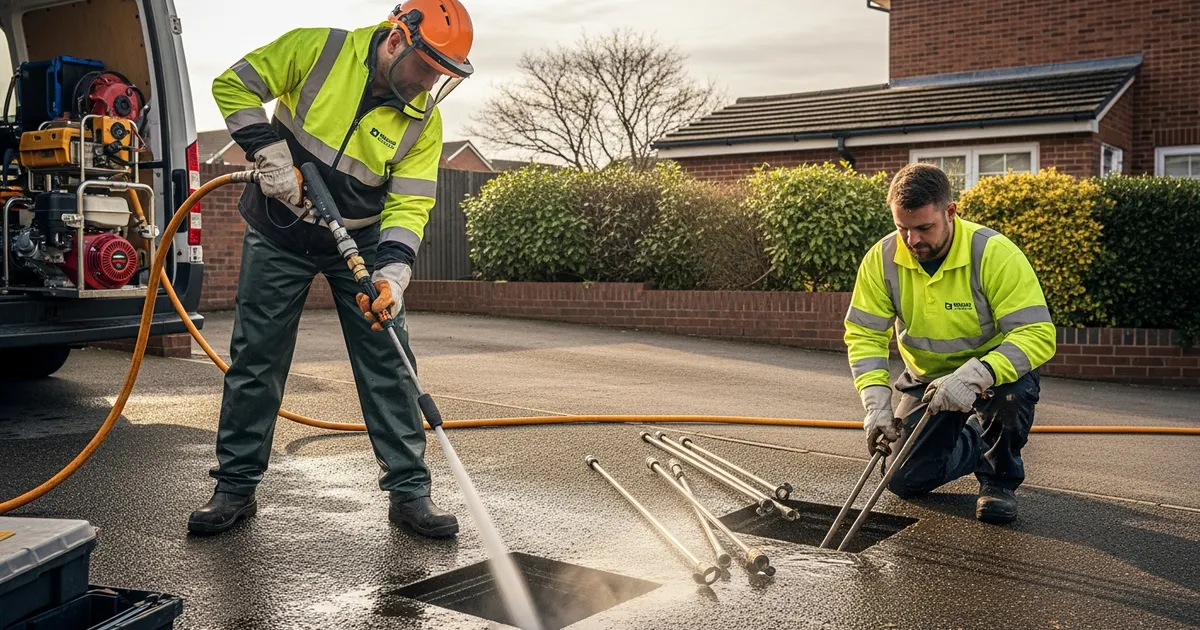
When it comes to clearing blocked drains, there are two main methods: traditional drain rods and modern high-pressure water jetting. Each has its place, but understanding the differences can help you choose the right solution for your problem.
Traditional Drain Rods
Drain rods have been used for over a century. They consist of flexible rods that screw together, with various attachments for breaking up blockages.
How They Work
The rods are inserted into the drain and pushed towards the blockage. By rotating and pushing, the operator attempts to break up or dislodge whatever is causing the problem.
Advantages of Drain Rods
- **Low cost**: Rods are inexpensive and widely available
- **Simple operation**: Basic training is sufficient
- **No power needed**: Can be used anywhere
- **Good for simple blockages**: Effective against loose debris and minor buildup
Limitations of Drain Rods
- **Limited reach**: Typically effective up to about 15 metres
- **Can't remove all debris**: May push material further into the pipe
- **Risk of damage**: Inexperienced users can crack pipes
- **Time-consuming**: Clearing tough blockages takes considerable effort
- **Incomplete cleaning**: Doesn't clean pipe walls
High-Pressure Water Jetting
Professional drain jetting uses specialised equipment to blast water through pipes at extremely high pressure (up to 4,000 PSI or more).
How It Works
A flexible hose with a specialised nozzle is inserted into the drain. Water is pumped through at high pressure, with jets pointing both forward (to cut through blockages) and backward (to pull the hose through and flush debris back towards the access point).
Advantages of Jetting
- **Complete blockage removal**: Breaks up and removes all debris
- **Cleans pipe walls**: Removes grease, scale, and buildup
- **Long reach**: Can clear pipes over 100 metres away
- **Fast and efficient**: Most blockages cleared in minutes
- **Preventative**: Regular jetting prevents future blockages
- **Safe for pipes**: When used correctly, won't damage modern pipes
Limitations of Jetting
- **Requires professional equipment**: Not a DIY solution
- **Water supply needed**: Requires access to significant water volume
- **Higher cost**: More expensive than basic rodding
- **Not suitable for damaged pipes**: Can worsen existing cracks
When to Use Each Method
Use Drain Rods For:
- Simple, accessible blockages
- Blockages you can see from the access point
- Situations where professional help isn't immediately available
- Very minor slow drainage
Use Professional Jetting For:
- Stubborn or recurring blockages
- Fat and grease buildup
- Tree root ingress
- Complete blockages
- Preventative maintenance
- Commercial properties
- Any blockage that rods can't clear
Why Professionals Prefer Jetting
At Blocked Drains Liverpool, we use high-pressure jetting as our primary clearing method because:
- **It's more effective**: Jetting clears blockages that rods simply can't
- **It's faster**: What might take hours with rods takes minutes with jetting
- **It's thorough**: The pipes are cleaned, not just unblocked
- **It lasts longer**: Clean pipes are less likely to block again soon
- **It's diagnostic**: Water flow patterns help identify other issues
The Professional Approach
When you contact us for a blocked drain in Liverpool, we typically:
- Assess the problem and access points
- Use CCTV to locate and identify the blockage (if needed)
- Select the appropriate jetting nozzle for the situation
- Clear the blockage with high-pressure water
- Verify the pipe is clear with another camera inspection
- Provide advice on preventing future blockages
Cost Comparison
While DIY drain rods might seem cheaper initially, consider:
- Rods may not solve the problem, requiring professional help anyway
- Incomplete clearing leads to recurring blockages
- Pipe damage from improper rodding can cost thousands to repair
- Professional jetting provides a lasting solution
If you suspect pipe damage is causing recurring issues, a CCTV drain survey can confirm whether drain repairs are needed before committing to more extensive work.
How Often Should You Jet Your Drains?
This is one of the questions we are asked most frequently by homeowners and landlords across Liverpool and Merseyside. The honest answer depends on the type of property, how heavily the drains are used, and the age of the pipework.
**Standard residential properties** — a typical three or four-bedroom house with two to four occupants — generally benefit from professional drain jetting every two to three years as a preventative measure. If the kitchen drain is used heavily (daily cooking from scratch, large family), annual jetting of the kitchen waste line is worth considering.
**Victorian and Edwardian terraces**, which make up a significant proportion of Liverpool's housing stock in areas like Wavertree, Kensington, Fairfield, and Everton, have narrower pipe bores than modern properties. The same applies across Merseyside — Walton, Birkenhead, Bootle, and St Helens all have large areas of Victorian terracing where narrow clay pipes are the norm. Original 4-inch clay waste pipes can accumulate grease and scale far more quickly than modern 110mm plastic equivalents. For these properties, annual or biennial jetting is strongly recommended — particularly if the kitchen drain runs any distance before joining the main stack.
**Flats and apartments** in converted Victorian properties often share drainage runs between multiple flats. In these cases, the volume of waste entering the shared pipe is much higher than a single household, and annual jetting of the shared stack is advisable. This is a maintenance responsibility that is typically managed by the freeholder or managing agent.
**Commercial properties** — restaurants, takeaways, cafes, and food preparation businesses — should be jetting their kitchen drain lines every three to six months. The volume of fats and food waste entering these systems is many times higher than a domestic property, and grease traps combined with regular jetting are the only reliable way to stay compliant and avoid serious blockages.
**Landlords** with multiple rental properties across Merseyside often find it cost-effective to schedule annual drain maintenance visits at the same time as their annual gas safety checks and electrical inspections. Proactive maintenance is far cheaper than emergency callouts — and protects the relationship with tenants by ensuring problems are caught before they become disruptive.
**After a blockage has been cleared**, many of our customers ask whether they need a follow-up jetting visit. If the blockage was caused by a structural issue (root ingress, a displaced joint), jetting alone won't prevent recurrence — a CCTV drain survey and possible drain repair is the appropriate next step. If the blockage was caused by grease or debris buildup, a thorough jetting followed by better habits and a planned revisit in 12 months is usually sufficient.
Our drain jetting service covers the full Merseyside area. Whether you are booking a routine maintenance visit or need an urgent blockage cleared, the process is the same: no call-out fee, a fixed price quoted before work begins, and a fully equipped engineer on site.
Choosing the Right Company for Drain Jetting
Not every drainage company uses the same quality of jetting equipment. Professional-grade machines operate at pressures of 2,000–4,000 PSI with flow rates of up to 40 litres per minute — far in excess of domestic or semi-professional equipment available for hire. The nozzle selection also matters: different blockage types (grease, roots, scale, debris) require different nozzle configurations to clear effectively without damaging the pipe.
When booking a drain jetting service in Liverpool, ask the company what pressure and flow rate their machines operate at, whether they carry multiple nozzle types, and whether they will test the drain with a camera after jetting to confirm it is clear. These questions quickly separate professional operators from those using inadequate equipment.
For reliable drain clearing across Liverpool, request a quote online from Blocked Drains Liverpool or request a quote online. We also cover Wirral, Southport, and all surrounding Merseyside areas.