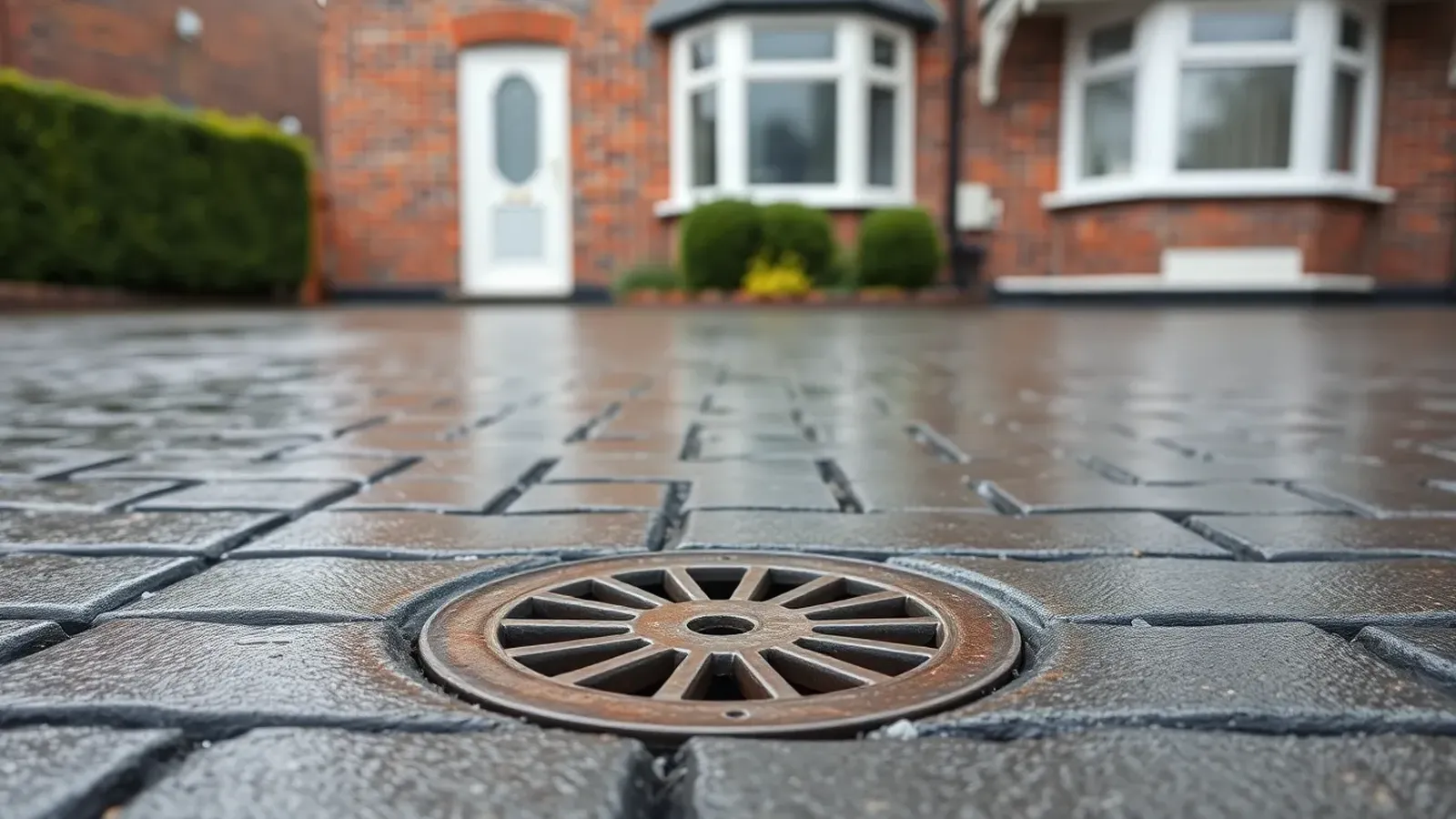

Drainage problems do not usually arrive without warning. Most of the blocked drains, flooded gullies, and collapsed junctions we attend at Blocked Drains Liverpool were preceded by months of gradual deterioration — signs that a systematic annual check would have caught early and cheaply. This checklist is designed as a working reference document, structured by season and by property type.
Spring: Clear What Winter Left Behind
Check and Clear Gullies
Gullies accumulate leaf debris, silt, and moss over winter. A blocked gully causes surface water to back up and find the next lowest point, which in older terraces is frequently the airbrick or the threshold of the back door. Lift every accessible gully grid and clear it by hand or with a small trowel. Flush through with a bucket of water. A dry sump suggests the trap has cracked; a sump that is flush with the surface suggests the drain run below is partially blocked.
Inspect Manhole Covers
Walk your property boundary and identify every manhole cover. They should be present, flush with the surrounding surface, and seated correctly. Lift accessible covers in your own curtilage. The benching inside should be intact, clean, and correctly graded. Standing water on the benching suggests the drain run downstream is partially obstructed.
Check Downpipe Connections
Follow each downpipe from your roof guttering down to where it enters the ground. The connection point should be sealed — no gap between the pipe and the back inlet gully. A gap allows surface water to run down the outside of the pipe into the soil rather than through the drainage system, contributing to damp around the wall base.
Summer: Root Management and Proactive Jetting
High-Pressure Jetting Before the Growing Season Peaks
Roots grow most actively in spring and early summer. If your property is near mature trees, the optimal time to clear any root ingress from your drain runs is June or July, before the current year's growth has fully consolidated.
Our drain jetting service uses high-pressure water to cut through root masses, dislodge accumulated fat and silt, and restore the full bore of the pipe. If your property has clay pipes — true for almost all Victorian and Edwardian terraces in Walton, Toxteth, Kensington, and Wavertree — and you have not had a CCTV drain survey in the past five years, summer is a good time to combine a proactive jetting visit with a brief camera inspection.
Check Garden Soakaways
If your property has a soakaway for surface water, summer is the easiest time to test it. Run a garden hose into the soakaway inspection point and observe whether the water dissipates quickly (working correctly) or backs up (silted or failing). A soakaway that backs up in summer will flood in autumn and winter.
Autumn: The Most Important Season for Liverpool Drains
Autumn is when Liverpool's drainage systems come under most stress. More drain blockages are reported in October and November than in any other two-month period.
Leaf Clearance: Frequency Matters
Properties in streets with significant canopy — the lime avenues of Bootle, the planes along Aigburth Road, the ornamental cherries favoured by 1930s builders across south Liverpool — need gully checks fortnightly from mid-October to mid-December.
Check Silt Traps and Yard Gullies
Where a yard or drive slopes toward a central gully, that gully accumulates washed-in silt continuously. Left through autumn, it is usually completely full by December and the gully becomes a pond in heavy rain. Lifting and clearing the silt trap manually takes ten minutes.
Winter: Freeze Protection and Overflow Readiness
Protect Trapped Gullies from Freezing
A gully with a water-filled sump will freeze in sustained cold weather, breaking the barrier against sewer gases. Gullies in exposed positions are most at risk. A small amount of rock salt in the sump reduces the freezing point significantly.
Know Where Your Stopcock Is
Every adult in the household should know where the stopcock is, and it should be tested every autumn to confirm it operates freely. Stopcocks that are not moved for years can seize.
Property-Type Specific Considerations
Victorian Terraces
The drainage in a mid-terrace Victorian property in Liverpool is almost always clay, laid in short sections, and often shared with neighbouring properties. The sections shared with neighbours — typically the main drain running beneath the shared rear entry — became public sewers adopted by United Utilities under the 2011 Water Industry Act changes in most cases.
Semi-Detached and Detached Properties
Semis typically have separate drainage for each property, with both a foul drain and a surface water drain. Annual maintenance should include flushing the surface water system in spring, and jetting the foul system every two to three years as standard.
Flats and Converted Properties
The responsibility for shared drainage infrastructure in a converted property typically sits with the freeholder or managing agent. If you are a leaseholder experiencing drainage problems, check your lease before commissioning any work — you may be entitled to require the freeholder to act.
What to DIY and What to Budget For
DIY-accessible tasks: gully clearing, manhole inspection (visual), leaf clearance, silt trap emptying, and stopcock testing. For the professional elements, request a fast, fixed-price quote online for an annual drain jetting visit or a CCTV survey. Jetting every two to three years is sufficient for most actively managed properties. A CCTV survey every five years, or whenever a persistent problem develops, gives you a clear picture of system condition.
To book any of the professional elements of this checklist, request a quote online from Blocked Drains Liverpool. We cover all of Merseyside with fixed-price visits and no call-out charge on standard callouts.